Thirty Cents of Postage and a Complete Stranger: The Pen Pal Era America Let Die
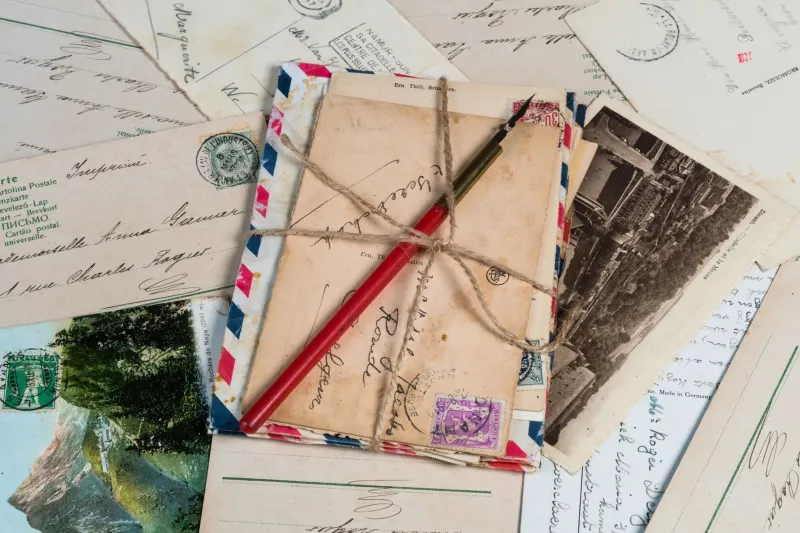
Somewhere in a box in an attic in Ohio, there's probably a bundle of letters tied with kitchen twine. The envelopes have foreign stamps on them — maybe British, maybe Australian, maybe from a small town in France that the recipient couldn't find on a map. The handwriting is careful, deliberate. Every word was chosen because paper and postage cost something, and because the person on the other end was worth the effort.
This was the pen pal era. And most Americans under 35 have no idea it ever existed.
How It Actually Worked
Pen pal culture in America wasn't some niche hobby for lonely kids in rural farmhouses. It was a genuine mass phenomenon. From the 1930s through the 1980s, organized pen pal programs connected millions of Americans — mostly children and teenagers — with correspondents across the country and around the world.
The mechanics were straightforward. Magazines like Boys' Life, Seventeen, and American Girl ran dedicated pen pal sections where readers could list their name, age, state, and interests. Want to write to a 13-year-old in Minnesota who likes horses and baseball? There was a listing for that. Schools ran their own exchange programs, pairing classes in New York with classes in Texas or in England. Organizations like the International Friendship League and Student Letter Exchange served as formal matchmakers, maintaining registries of young people eager to connect across borders.
 Photo: New York, via www.metrc.com
You wrote a letter. You mailed it. Then you waited — sometimes two weeks, sometimes a month — to see if anyone wrote back. If they did, something remarkable began.
The Patience That Built Real Connection
Here's what people who lived through it remember most: the waiting made it matter.
When a letter arrived, it wasn't a notification you could swipe away. It was a physical object that someone had touched. They had chosen the paper, picked up a pen, and sat down with the specific intention of communicating with you. Every sentence was considered. You couldn't dash off a careless reply the way you might fire off a text — the investment of time on both ends created a kind of mutual seriousness that felt more like a handshake than a casual wave.
Kids who participated in these programs often describe their pen pals as some of the most meaningful friendships of their childhoods, even though — or maybe because — they never met in person. The distance forced a certain honesty. You couldn't rely on shared physical space or body language. You had to actually describe yourself, your world, your thoughts. Letters became tiny essays in self-revelation.
Some of these correspondences lasted decades. People who met as twelve-year-olds through a magazine listing eventually attended each other's weddings, mailed baby announcements, and grieved together through typed condolence notes when parents passed away.
The Collapse Happened Faster Than Anyone Expected
Email didn't kill pen pal culture gradually. It killed it almost overnight.
Through the mid-1990s, the programs were still running. Then AOL arrived in living rooms across America, and suddenly the entire premise — that connecting with someone far away required patience and postage — evaporated. Why wait three weeks for a reply when you could get one in three minutes?
By 2000, the magazine pen pal listings had largely disappeared. The school exchange programs wound down. The formal matchmaking organizations either folded or retreated to the margins. A tradition that had connected generations of Americans to the wider world simply stopped, not because anyone decided to end it, but because faster options made it feel obsolete.
Social media finished the job. By the time Facebook and then Instagram reshaped how Americans understood friendship, the idea of building a relationship through careful, considered correspondence felt almost quaint — like churning your own butter.
What We Actually Lost
It's easy to frame this as simple nostalgia, but the loss is more specific than that.
Pen pal culture taught kids something that no social media platform has ever successfully replicated: how to be interesting in writing. How to describe your world to someone who shares none of your context. How to ask a good question and then — this is the critical part — wait for the answer without knowing what it would be.
It also produced a particular kind of cross-cultural curiosity that was genuinely grassroots. A teenager in suburban Connecticut learning that her pen pal in rural Georgia ate grits for breakfast and went to a church that sang a full hour before the sermon didn't need a documentary to understand that America contained multitudes. She just needed a mailbox.
Today's digital connections are faster, broader, and in many ways more convenient. You can follow ten thousand people on Instagram and maintain a running text thread with someone in Tokyo. But the depth that came from a single carefully handwritten letter — the intimacy of knowing someone spent thirty minutes choosing their words for you — is largely gone.
A Question Worth Sitting With
There's a version of connection that required effort, and a version that requires almost none. We chose the second one, collectively and without much debate, because it was easier and faster and more immediately satisfying.
But easier isn't always better. The pen pal generation understood something that the algorithm generation is still figuring out: that the friction in building a relationship is often the relationship. The waiting, the wondering, the careful composition of a letter — that was the point, not the obstacle.
Somewhere in that Ohio attic, those bundled letters are still there. And whoever wrote them knew something about friendship that a thousand followers can't quite replace.