Your Daily Doorstep Delivery Disappeared for 50 Years—Then Came Back Stronger Than Ever
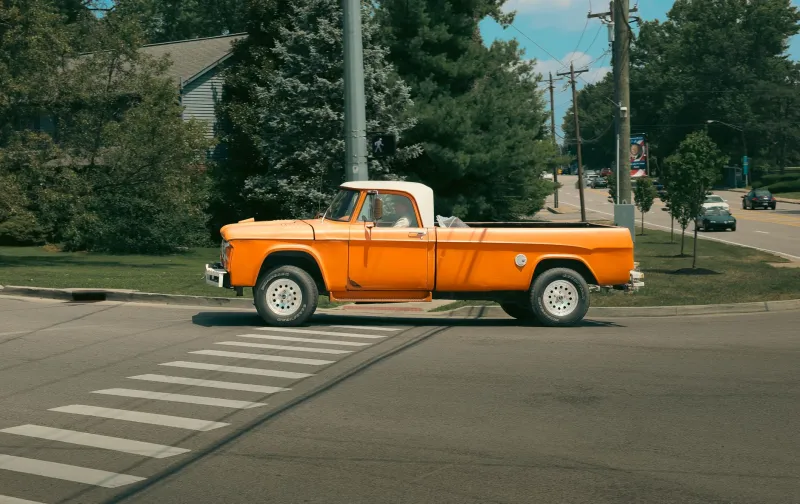
The Original Subscription Economy
Every morning at 5 AM, Frank the milkman knew exactly what each house on Maple Street needed. Mrs. Henderson got two quarts of whole milk and a pound of butter on Tuesdays. The Johnsons needed extra cream on weekends for their coffee cake. The Kowalskis, with four growing boys, went through a gallon every other day.
 Photo: Maple Street, via i.pinimg.com
This wasn't just milk delivery—it was America's original algorithm, running on human memory and handwritten route cards. Frank worked for Meadowbrook Dairy, one of thousands of local operations that kept American households stocked with essentials without anyone ever visiting a store.
 Photo: Meadowbrook Dairy, via 0701.static.prezi.com
The milkman was just one piece of a vast home delivery network that most Americans under 60 never experienced. The bread man came Wednesdays. The ice truck rumbled through every few days, delivering blocks that kept iceboxes cold. Some neighborhoods had egg men, produce trucks, and even mobile grocery stores that brought the market to your doorstep.
The Great Disruption
By 1970, Frank's route was history. Meadowbrook Dairy had closed, its trucks sold to a scrap dealer. The culprit wasn't technology or changing tastes—it was the supermarket.
Chain stores like A&P and Kroger offered something Frank couldn't: variety, convenience, and lower prices all under one fluorescent-lit roof. Why wait for the milk truck when you could drive to the store and choose from a dozen brands? Why coordinate with multiple delivery men when you could knock out all your shopping in one trip?
American families traded their front-porch convenience for car-trunk efficiency. The suburban shopping center became the new town square, and the weekly grocery run became a ritual of modern life. Home delivery went from normal to nonexistent in less than a generation.
The infrastructure disappeared too. Local dairies were bought by regional chains, then absorbed by national corporations. The small-scale distribution networks that made daily delivery economical were dismantled in favor of massive warehouses serving huge geographic areas.
The Numbers Behind the Shift
In 1950, home delivery accounted for nearly 40% of all grocery purchases in American cities. By 1980, that number had dropped below 2%. The average American household went from receiving deliveries 3-4 times per week to maybe getting pizza dropped off on Friday nights.
Supermarket shopping trips, meanwhile, increased from once a week to 2.2 times per week by the 1990s. Americans were spending more time shopping for basics, not less—but they were doing it in concentrated bursts rather than through daily doorstep interactions.
The job market reflected this shift. In 1960, delivery drivers were common neighborhood fixtures, often working for local businesses they'd been with for decades. By 1990, those jobs had largely vanished, replaced by retail clerks in air-conditioned supermarkets.
The Digital Renaissance
Then something unexpected happened. The internet brought Frank back—just with different trucks and smartphone apps.
Amazon's same-day delivery, Instacart's grocery service, and DoorDash's restaurant runs have created a home delivery economy that dwarfs anything Frank's generation could have imagined. Americans now get everything from toilet paper to Thai food dropped at their doors, often within hours of ordering.
The scale is staggering. Amazon alone delivers over 5 billion packages annually to American homes—more than Frank's entire industry handled in its heyday. Food delivery, virtually nonexistent outside of pizza in 1990, now represents a $150 billion market.
Today's delivery ecosystem makes Frank's operation look quaint. Modern logistics networks use GPS tracking, predictive algorithms, and real-time inventory management to coordinate millions of deliveries daily. What Frank accomplished with personal relationships and handwritten notes now requires supercomputers and satellite networks.
The Unexpected Full Circle
Yet the basic promise remains identical: never leave your house for essentials. Frank guaranteed that families could maintain their pantries without shopping trips. Amazon Prime promises the same thing, just with a catalog of millions of items instead of dairy products.
The personal touch has returned too, in digital form. Delivery apps learn your preferences just like Frank learned Mrs. Henderson's butter schedule. They suggest items based on past orders, remember your dietary restrictions, and can predict when you'll need to restock basics.
Some services have even revived the old milk-and-eggs model directly. Companies like Milk & Eggs in Los Angeles and Fresh Direct in New York offer regular delivery of fresh groceries, complete with standing orders that arrive automatically—exactly what Frank provided, just with organic kale instead of just whole milk.
What Changed, What Stayed the Same
The technology is radically different, but the underlying desire hasn't budged: Americans want convenience without compromise. Frank's customers valued time and personal service over variety and price shopping. Today's delivery customers make the same trade-off, just with more options and higher expectations.
The economic model has flipped, though. Frank worked for local businesses serving small geographic areas profitably. Today's delivery economy relies on massive scale, venture capital funding, and razor-thin margins to make the math work. What was once profitable at the neighborhood level now requires billion-dollar logistics networks.
The social aspect has changed too. Frank was a community figure who knew his customers personally. Today's delivery drivers are often gig workers cycling through different apps, with minimal customer interaction. We've regained the convenience but lost the relationships.
The full circle from Frank to Amazon reveals something fundamental about American consumer behavior: we'll always choose convenience when we can afford it. The 50-year detour through supermarket aisles wasn't about rejecting home delivery—it was about waiting for technology to make it economically viable again.
Frank would recognize today's delivery trucks, even if he'd be amazed by the smartphones coordinating them. The promise is the same: everything you need, brought to your door, so you never have to leave home for the basics of daily life.