Picnics Among the Headstones: The Surprising Way Americans Once Spent Their Sundays
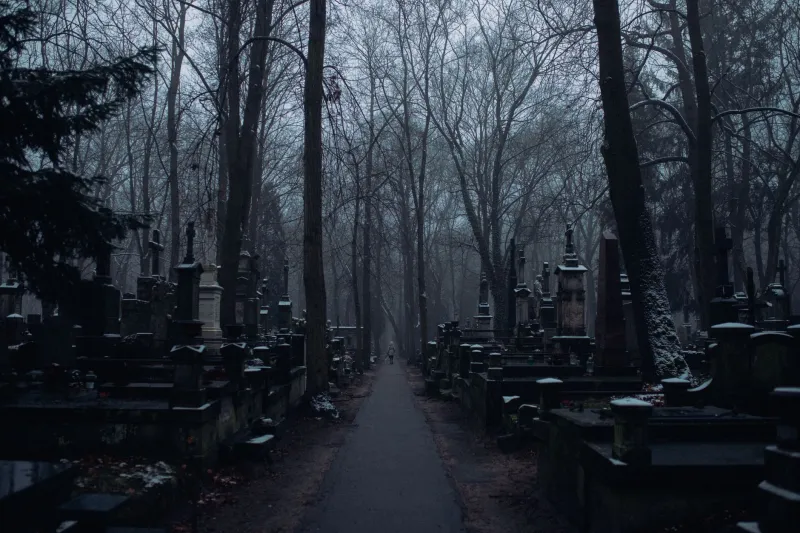
Picture a warm Sunday afternoon in 1855. A family loads a basket with cold chicken, bread, and a jug of lemonade, dresses in their better clothes, and heads out for an afternoon of fresh air and relaxation. Their destination? The local cemetery.
This isn't a scene from a gothic novel. It's just an ordinary weekend in 19th-century America.
The Original Public Park
Before Frederick Law Olmsted designed Central Park, before municipal recreation departments existed, before the concept of a public green space was even widely understood, Americans needed somewhere to go. Towns were dense, homes were small, and open land was either farmland or wilderness — neither particularly welcoming for a Sunday stroll.
Cemeteries filled that gap in a way that feels almost impossible to imagine today.
Starting in the 1830s, a movement called the Rural Cemetery Movement deliberately designed burial grounds as landscaped retreats. Mount Auburn Cemetery in Cambridge, Massachusetts, opened in 1831 and was immediately celebrated not just as a place of mourning but as a destination for the living. Curved pathways wound through manicured lawns. Trees were planted for shade and beauty. Ponds reflected the sky. Families came not only to visit graves but to walk, to read, to sketch, and yes — to eat.
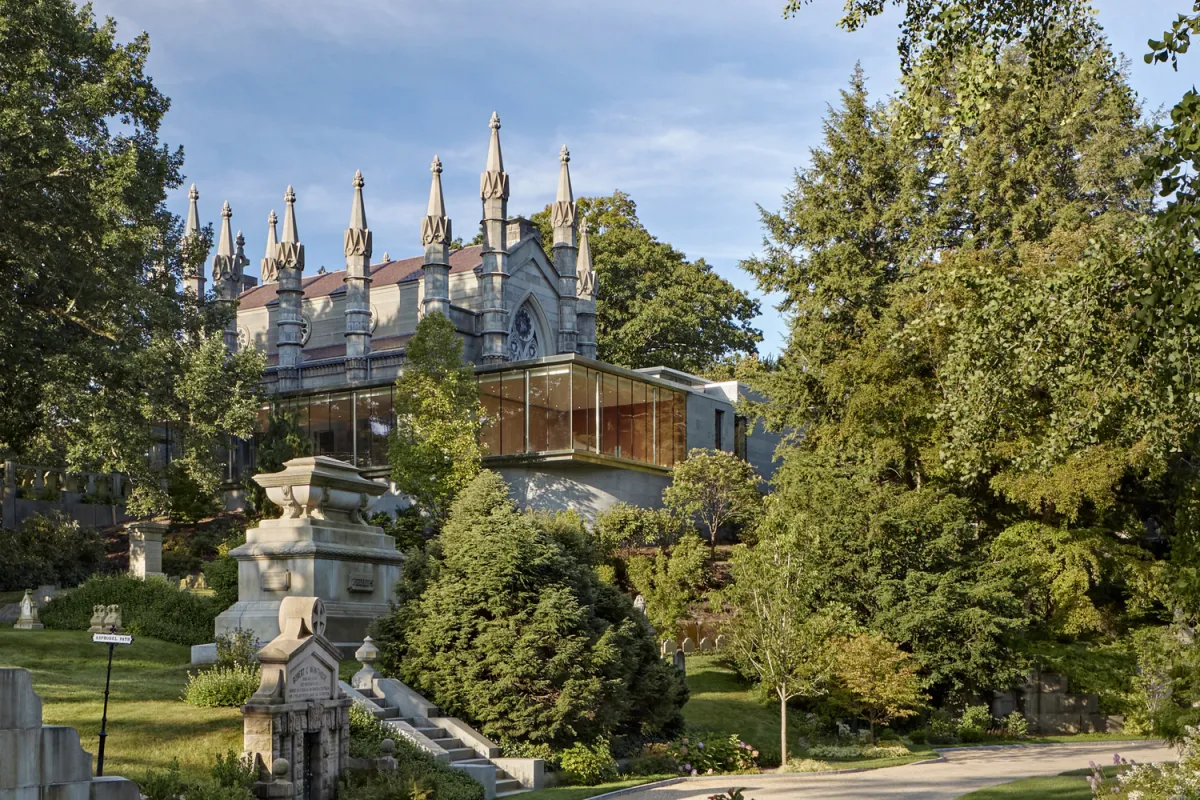 Photo: Mount Auburn Cemetery, via images.adsttc.com
Cemeteries like Laurel Hill in Philadelphia and Green-Wood in Brooklyn became so popular that they issued visitor guides. Green-Wood reportedly drew half a million visitors a year by the 1860s, making it one of the most visited destinations in the entire country. The crowds were so large that city planners eventually took notice and began designing dedicated public parks — partly to give people somewhere else to go.
In a very real sense, the American park was invented because the cemetery was getting too crowded.
Death Was a Different Neighbor Back Then
To modern eyes, picnicking near gravestones feels unsettling at best, disrespectful at worst. But that reaction says more about us than it does about our ancestors.
In the 19th century, death was woven into everyday life in ways we've almost entirely insulated ourselves from. Children died young. Neighbors died suddenly. Bodies were laid out in the family parlor. Funerals happened at home. Death wasn't a thing that occurred behind closed hospital doors and was managed by professionals — it was a community event, a domestic reality, a constant presence.
Visiting the cemetery wasn't a morbid act. It was a way of staying connected — to loved ones, to history, to the town's story. The headstones told you who built the church, who survived the war, who came before. Spending time there wasn't strange. It was grounding.
Front porches served a similar purpose. On summer evenings, families sat outside and neighbors stopped to talk. Conversation moved slowly. There was no agenda. The porch was social infrastructure — a place where community happened without being scheduled.
How Leisure Got Professionalized
The shift away from cemetery picnics didn't happen overnight, and it wasn't just about parks opening up. It was about leisure itself being reimagined as something that required a destination, a ticket, and an experience curated by someone else.
By the early 20th century, amusement parks were drawing massive crowds. Coney Island was packing in a million visitors on a single summer weekend. The automobile made it possible to travel farther for entertainment, and the entertainment industry was happy to meet Americans wherever they arrived.
After World War II, the transformation accelerated. Suburbs spread out. Television pulled families indoors. Drive-in movies replaced front-porch socializing. Disneyland opened in 1955 and essentially invented the modern concept of the theme park — a total environment engineered entirely for enjoyment, with nothing left to chance or imagination.
Leisure had become a product. And Americans bought it enthusiastically.
From Blankets on Grass to Curated Feeds
Fast forward to today and the distance traveled is almost dizzying.
Americans now spend an average of over four hours a day looking at their phones. Streaming platforms offer tens of thousands of hours of content, yet somehow the most common complaint is that there's nothing to watch. Weekends are scheduled with the precision of a work calendar — brunch reservations, fitness classes, ticketed events, social obligations that feel less like rest and more like a second shift.
Even outdoor recreation has been professionalized. National parks require advance reservations. Trail apps track your every step. Hiking gear costs as much as a piece of furniture. The simple act of going outside and spending time somewhere beautiful has been layered with logistics, equipment, and the quiet pressure to document it for an audience.
The cemetery picnic required nothing. A blanket, some food, and a willingness to sit with the world as it was.
What We Actually Lost
It would be easy to frame this as pure progress — we traded headstones for roller coasters, and who could blame us? But there's something worth pausing on in the shift.
Those cemetery afternoons weren't just about the lack of alternatives. They were about a particular quality of presence. People sat in a place that connected them to their community's history and their own mortality, and they didn't find it depressing. They found it peaceful. They talked to each other. They watched their children run between the trees. They existed, unhurried, in a shared space.
Modern leisure is almost aggressively curated against that kind of stillness. Every experience is optimized. Every moment is potentially shareable. The idea of sitting somewhere quiet, without a screen or a schedule, and simply being in a place — that now feels like a skill we have to consciously practice rather than something we just did on Sunday afternoons.
America didn't just change where it spent its free time. It changed what free time was for.
And somewhere in a beautifully landscaped cemetery, under trees planted a hundred and fifty years ago for exactly this purpose, there's still a bench. Still some shade. Still the same quiet that people once sought out every single week.
Most of us just don't think to sit there anymore.