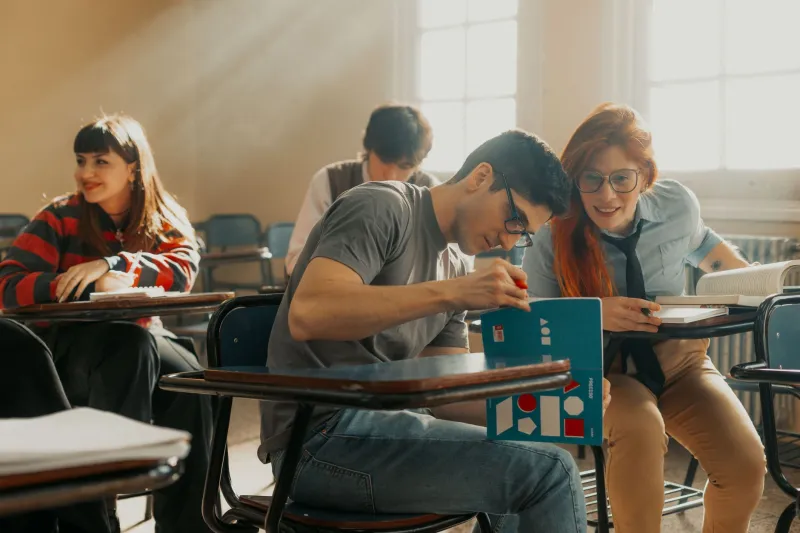
Somewhere around 1962, a young man from rural Ohio decided, somewhat on a whim, that he'd give college a try. He'd been working at his uncle's hardware store since graduating high school. A friend mentioned that the state university was affordable and that you could register right before the semester started. So he drove over, stood in a line, paid somewhere around forty dollars in fees, and enrolled.
Monday morning, he was a college student.
No application. No essay about his personal growth. No letters of recommendation. No standardized test scores submitted months in advance. No waitlist, no portal, no acceptance email arriving at midnight while his family huddled around a laptop. He just showed up, and the door opened.
When College Was a Walk-In Decision
For much of the mid-20th century, higher education in America operated on a fundamentally different premise than it does today. The assumption was that college should be accessible — not just to the already-polished, already-prepared children of professional families, but to anyone with enough curiosity and enough drive to try.
Public universities were built explicitly around this idea. The Morrill Act of 1862 had established land-grant colleges specifically to serve ordinary Americans — farmers, laborers, working-class families who would never have had access to the elite Eastern institutions. By the postwar boom years, the GI Bill had pushed college attendance dramatically higher, and state systems expanded rapidly to meet the demand.
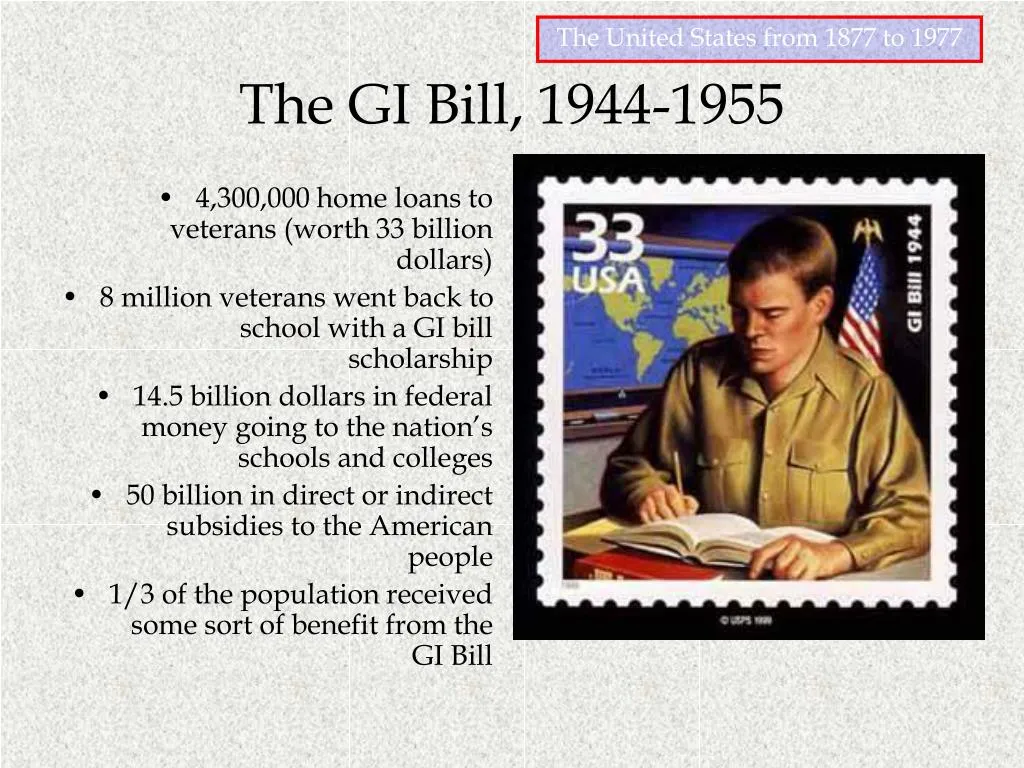 Photo: GI Bill, via image.slideserve.com
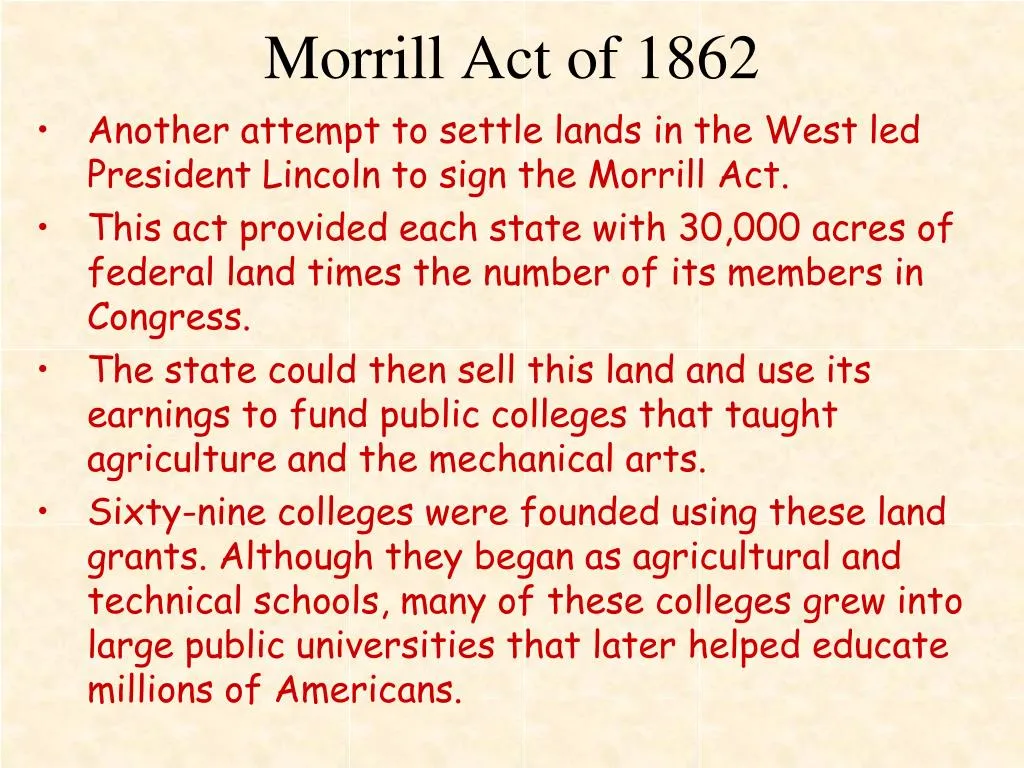 Photo: Morrill Act of 1862, via image3.slideserve.com
Registration at many schools was genuinely casual by modern standards. You could enroll weeks before a semester began. Admissions at public universities were largely open — if you had a high school diploma and could pay the fees, you were in. The fees, adjusted for inflation, were modest enough that a summer of work could cover them.
The process wasn't chaotic. It was simply human-scaled. Advisors knew students by name. Department heads made exceptions when circumstances called for it. The whole enterprise operated on the assumption that adults deserved to be treated like adults.
When the Door Started Closing
The shift didn't happen all at once, and it wasn't driven by a single decision. It was a slow accumulation of changes, each one defensible on its own terms, that together transformed college admission from an open door into an obstacle course.
As more Americans pursued degrees, competition for spots at the most desirable schools increased. Universities responded by raising their standards — which, in practice, meant adding more requirements, more metrics, more ways to sort applicants. The SAT, originally designed as a rough equalizer, became the centerpiece of an entire preparation industry. By the 1980s, SAT prep courses were a standard middle-class purchase.
Applications got longer. Essays multiplied. Extracurricular activities shifted from things students did because they enjoyed them to line items on a resume that had to be strategically assembled years in advance. Guidance counselors at well-funded suburban schools began working with students on college strategy as early as ninth grade.
And then the rankings arrived. U.S. News & World Report published its first college rankings in 1983, and the effect was seismic. Schools that had previously competed on the quality of their teaching now competed on metrics like acceptance rates and average SAT scores — which created a powerful incentive to reject more applicants, not fewer. A lower acceptance rate meant higher prestige. The door got narrower on purpose.
 Photo: U.S. News & World Report, via www.liblogo.com
What an 18-Year-Old's Life Became
Today, applying to college is a multi-year project that begins, for many families, before a child has finished middle school.
The average competitive applicant submits to somewhere between eight and fifteen schools. Each application requires essays — sometimes five or six separate prompts per school — that must be carefully crafted to present the applicant as a compelling, coherent narrative. Extracurricular activities must demonstrate both passion and leadership. Summers must be filled with internships, research programs, or service trips that signal ambition and character.
The cost of this process is substantial. SAT and ACT prep courses run from a few hundred to several thousand dollars. Application fees alone can total over a thousand dollars for a student applying to a dozen schools. Private college counselors — a profession that barely existed forty years ago — charge anywhere from a few hundred dollars an hour to tens of thousands for multi-year packages.
And at the end of all of it, a rejection from a school that accepted forty percent of applicants twenty years ago and now accepts eight.
For students whose families can afford the preparation, the process is exhausting but navigable. For first-generation students, students from under-resourced schools, students whose parents have no idea what a Common App is — the system is something else entirely.
The Question Nobody Wants to Ask
It's worth stepping back and asking what all of this complexity is actually selecting for.
The young man from Ohio who walked in and enrolled in 1962 didn't have a polished personal essay. He hadn't done a summer research program. His extracurriculars were mostly working at his uncle's store and playing pickup basketball. But he was curious, he was willing to work, and he was ready to learn.
The modern admissions process is extraordinarily good at identifying students who are skilled at the admissions process. Whether it's equally good at identifying students who will think deeply, contribute meaningfully, and make the most of an education — that's a harder case to make.
Some schools have started to notice. Test-optional policies spread rapidly during the pandemic and many stuck. A handful of institutions have dramatically simplified their applications. A few community colleges still operate on something close to open enrollment.
But the dominant model — the years-long campaign, the curated self-presentation, the anxiety-industrial complex that surrounds it — hasn't changed.
The Door That Used to Be Open
There's a version of America where a hardware store worker from rural Ohio could decide in August that he wanted to learn something, drive to the nearest university, and walk in as a student by Monday morning.
That America existed. It wasn't perfect, and it excluded plenty of people for reasons that had nothing to do with their readiness for college. But the underlying idea — that education should be accessible, that the decision to learn shouldn't require years of strategic maneuvering — was something worth holding onto.
We traded it, gradually and without quite meaning to, for a system that treats an eighteen-year-old's entire life as a product to be packaged and sold to an admissions committee.
Somewhere in there, the door got a lot heavier. And a lot of people are still standing on the wrong side of it.