Built to Last Forever: When Americans Fixed Things Instead of Tossing Them
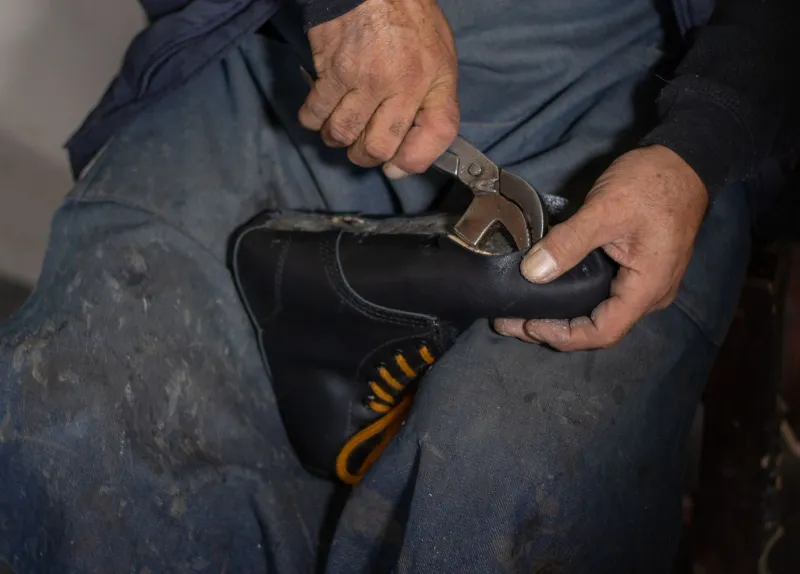
The Cobbler Was Your Best Friend
On the corner of Fifth and Main in every American town, you'd find Murphy's Shoe Repair. Murphy could rebuild a worn sole, stretch a tight fit, and make a ten-year-old pair of Oxfords look factory-fresh. His shop smelled of leather and glue, and his workbench held shoes belonging to half the neighborhood.
 Photo: Fifth and Main, via profitroom-uploads.fra1.digitaloceanspaces.com
Americans didn't throw away shoes in 1950—they fixed them. A good pair of leather shoes was expected to last decades with proper care and regular resoling. Murphy's customers brought in the same shoes year after year, building relationships that lasted as long as the footwear.
This wasn't unique to shoes. Every neighborhood had repair specialists: tailors who could reweave fabric, appliance repair men who made house calls, and furniture craftsmen who could rebuild a chair frame. The default response to a broken item wasn't replacement—it was restoration.
The Mending Mindset
American households operated on what we'd now call a circular economy, though nobody used that term. Clothing was altered, hemmed, and passed down through families. Socks were darned until they were more thread than original fabric. Coats were relined, dresses were taken in or let out, and children's clothes were handed down through multiple siblings.
Women's magazines dedicated entire sections to mending techniques. Popular Mechanics ran detailed guides on fixing household appliances. The idea of discarding something repairable seemed wasteful, even immoral, to generations who remembered the Depression.
 Photo: Popular Mechanics, via upload.wikimedia.org
This mindset extended beyond necessity into pride. A well-maintained item—whether a car, a coat, or a kitchen appliance—reflected the owner's character. Taking care of your possessions was considered a virtue, like keeping a clean house or maintaining a tidy yard.
When Everything Changed
The shift began in the 1960s with planned obsolescence and accelerated through the following decades. Manufacturers discovered they could increase profits by designing products to fail or become outdated quickly. Why sell someone a refrigerator that lasts 30 years when you could sell them three refrigerators over the same period?
Fast fashion arrived in the 1990s, making clothing so cheap that repair became economically irrational. Why spend $15 fixing a shirt when you could buy a new one for $12? The math that once favored Murphy's cobbler shop suddenly favored the mall.
Global manufacturing made replacement cheaper than repair for almost everything. A new toaster from China cost less than fixing an old American-made one. Repair shops couldn't compete with factories paying workers dollars per day instead of dollars per hour.
The Staggering Scale of Waste
The numbers reveal just how dramatically American consumption habits have shifted. In 1960, the average American generated about 2.7 pounds of waste daily. Today, that figure has nearly doubled to 4.9 pounds per person per day.
Clothing waste alone tells the story of transformation. Americans now discard about 81 pounds of clothing and textiles annually—enough to fill an entire bedroom with discarded garments every year. The average piece of clothing is worn just seven times before disposal, compared to the decades of use our grandparents extracted from each garment.
The appliance industry reflects similar patterns. Refrigerators that once lasted 20-25 years now average 10-15 years. Washing machines have dropped from 15-year lifespans to 8-10 years. Even when repair is technically possible, the cost often approaches replacement price, making the decision economically obvious.
The Hidden Costs of Disposability
This shift toward disposability carries consequences that Murphy's generation never imagined. The environmental impact of constant replacement dwarfs the resources required for repair. Manufacturing a new shirt requires about 700 gallons of water; mending an old one requires none.
The economic impact has been subtler but equally significant. Entire industries—shoe repair, tailoring, small appliance repair—have virtually disappeared from American main streets. The skills that kept households running efficiently for generations have been lost as repair knowledge became unnecessary.
Community connections suffered too. Murphy knew his customers personally, understanding their preferences and budgets. His modern equivalent—if one exists—is likely an anonymous online retailer who ships replacement items without any personal interaction.
The Repair Renaissance
Interestingly, some Americans are rediscovering repair culture. YouTube tutorials have democratized fix-it knowledge that was once passed down through apprenticeships. "Right to repair" movements push back against manufacturers who design products to resist fixing.
Higher-end brands now market durability and repairability as premium features. Companies like Patagonia and Red Wing Shoes have built businesses around products designed to last decades with proper care and maintenance. Their customers pay more upfront but embrace the long-term value proposition that was once standard across all price points.
Urban areas are seeing the return of repair cafes and fix-it clinics where volunteers help people repair items that would otherwise be discarded. These events combine environmental consciousness with the satisfaction of restoring something to usefulness.
What We Lost and Found
The transition from Murphy's repair shop to Amazon's replacement economy represents more than changing economics—it reflects a fundamental shift in how Americans relate to material possessions. Items once treasured and maintained have become disposable conveniences.
We gained convenience, variety, and lower upfront costs. We lost durability, craftsmanship, and the deep satisfaction that comes from maintaining something beautiful over decades. We traded the pride of a well-maintained possession for the excitement of constantly acquiring new ones.
The environmental and social costs are becoming impossible to ignore. Landfills overflow with items that previous generations would have repaired multiple times. Skills that sustained households for centuries have vanished in just two generations.
Perhaps most significantly, we lost the patience that repair requires. Murphy's customers understood that good things took time—time to craft initially, time to maintain properly, and time to repair when necessary. Today's replacement economy promises instant gratification but delivers constant disposal.
The cobbler's hammer and the seamstress's needle once represented American values of thrift, craftsmanship, and making do. Their silence in modern neighborhoods says something profound about how quickly a culture can abandon practices that sustained it for generations. Whether we can rediscover the wisdom of repair remains an open question—one that may determine not just what we own, but who we become as a society.