Photo: Mictlancihuatl, CC BY-SA 4.0, via Wikimedia Commons
The Price Tag Used to Be a Promise — Now It's Just a Suggestion
At some point in the last two decades, buying things got complicated in a way that's hard to articulate but impossible to ignore. You check a flight price on Monday, come back Wednesday, and it's $80 higher. You order the same Uber ride two days in a row and pay completely different amounts. You notice that the streaming service you've had for three years now costs more than what new subscribers are being offered — or less, depending on which screen you're looking at.
None of this would have made any sense to an American consumer in 1965. Or 1985. Or even, really, 2005.
When the Price Was Just the Price
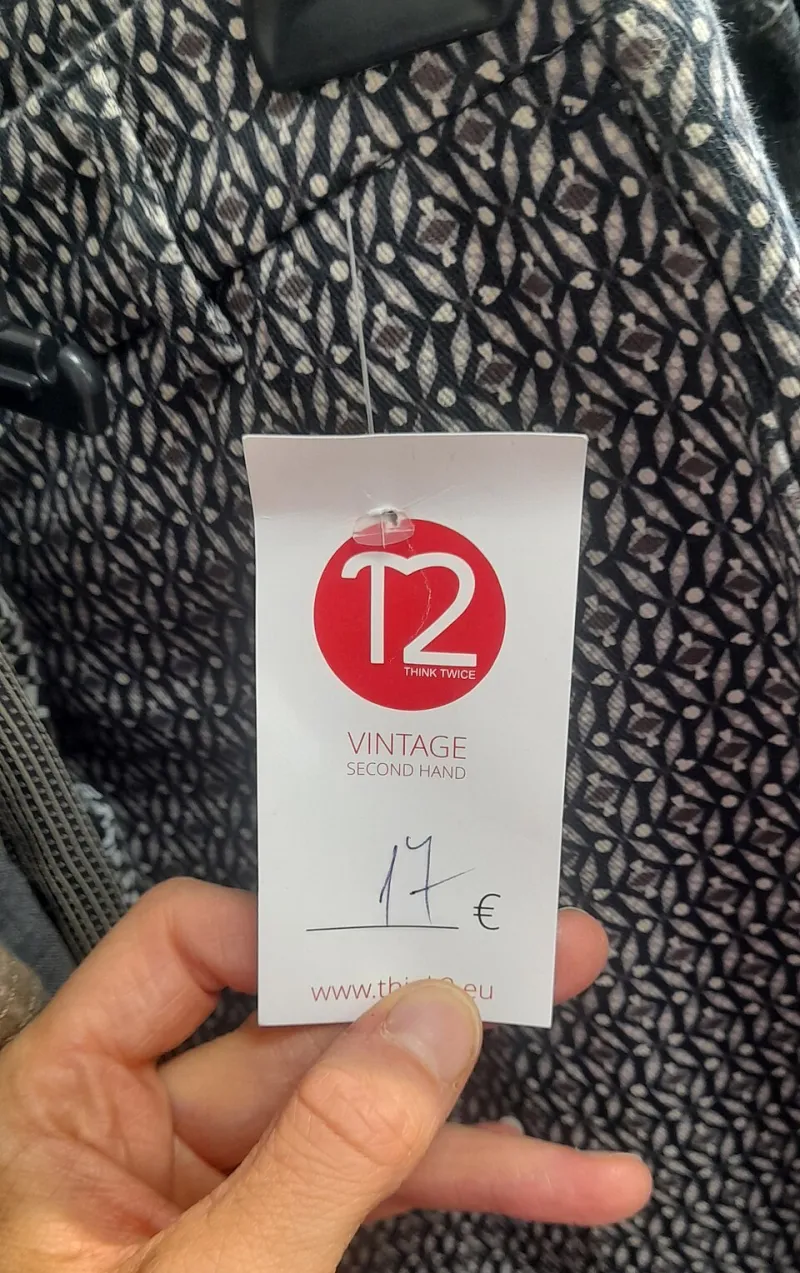
For most of the 20th century, American retail operated on a principle so basic it barely needed a name: fixed pricing. The number on the label was the number you paid. A can of Campbell's tomato soup cost what it cost. A movie ticket at the local theater had one price — maybe two, if there was a children's matinee rate. A gallon of milk, a pair of Levi's, a paperback novel: all carried prices that were printed, stable, and the same for every customer who walked in.
This wasn't just convention. In several important sectors, it was law. The Civil Aeronautics Board regulated domestic airfares from 1938 until deregulation in 1978, meaning that a ticket from New York to Los Angeles cost the same amount regardless of which airline you chose, when you booked, or how full the plane happened to be. You could comparison shop for legroom or meal service, but not for price. The fare was the fare.
 Photo: Los Angeles, via cdn.britannica.com
Grocery stores used printed price stickers. Department stores ran sales on schedules — January white sales, summer clearances — but the sale price, when it applied, was the same for everyone. There was no algorithm running in the background deciding that one customer's browsing history suggested they'd pay 15% more.
The Logic Behind Stable Prices
Fixed pricing wasn't just simpler — it represented a specific relationship between sellers and buyers. The price tag was, in a sense, a social contract. The store was telling you: this is what we've decided this is worth, and we're making that same offer to everyone. You could take it or leave it, but you weren't being individually assessed and charged accordingly.
This mattered enormously for household budgeting. Working-class and middle-class Americans in the mid-20th century ran their finances with a precision that required knowing, in advance, what things cost. Envelope budgeting systems — literally dividing cash into labeled envelopes for groceries, rent, utilities, clothing — depended on price predictability. You could plan a week of meals because you knew, within a few cents, what each ingredient would cost at the store.
The psychological effect was also significant. Knowing the price in advance meant you could make decisions with confidence. There was no lingering suspicion that someone else paid less, no anxiety about whether you'd checked at the right moment, no sense that the seller knew something about your willingness to pay that you didn't know yourself.
Deregulation Opened the Door
Airline deregulation in 1978 was the first major crack in the fixed-price model, and what happened next was instructive. Airlines, suddenly free to set their own fares, discovered that they could extract more revenue by charging different passengers different amounts for the same seat. Early yield management systems — primitive by today's standards — began adjusting prices based on demand, booking timing, and seat availability.
At first, this felt like a consumer win. Discount fares appeared. Flying became accessible to people who'd never been able to afford it before. But the trade-off was complexity: the same flight now had dozens of fare classes, and the price you paid depended on factors that had nothing to do with the service you received.
The logic spread. Hotels adopted it. Rental car companies adopted it. And then the internet arrived and made real-time price adjustment possible for virtually any product or service.
The Algorithm Moves In
Today, dynamic pricing is everywhere, and it's accelerating. Amazon reportedly changes prices on millions of products millions of times per day. Grocery chains are testing electronic shelf labels that can update prices in real time — meaning the cost of your pasta could technically shift between the time you put it in your cart and the time you reach the checkout. Ticketmaster's surge pricing model has made buying a concert ticket feel like bidding in an auction. Uber and Lyft's surge pricing means the ride home from a crowded event costs multiples of the ride there.
Retailers now use tools that can assess your individual browsing behavior, device type, location, and even the apparent affluence of your neighborhood to determine what price to show you. The same hotel room, searched on a new laptop versus an older one, may display different rates. The price tag has become a personalized offer rather than a universal one — and you usually have no way of knowing which version you're seeing.
What It Does to the Way We Think About Money
The shift from fixed to fluid pricing has done something subtle but significant to consumer psychology. It has made the concept of a "fair price" feel almost meaningless. If the price of a flight can double in 48 hours, and if two people sitting in identical seats may have paid amounts that differ by hundreds of dollars, then what does any price actually signify?
It has also introduced a persistent low-level anxiety into everyday purchasing. Buying anything significant now involves a kind of meta-game: Is this the right time to buy? Should I wait? Did I miss a better price? Is this price being shown to me specifically because someone thinks I'll pay it?
This cognitive overhead is a real cost, even if it doesn't show up on a receipt. The mental energy Americans now spend trying to game pricing systems — monitoring flight prices for weeks, using incognito browsers, hunting for promo codes, timing purchases around sale cycles — is time and attention that used to go toward other things.
The Trust That's Quietly Eroded
There's something worth naming directly: dynamic pricing requires consumers to accept that they don't fully know what they're paying or why. That's a significant transfer of power from buyer to seller, enabled by information asymmetry that didn't exist when prices were printed on labels and the same for everyone.
The fixed price era wasn't perfect. Prices could be unfair, markets could be uncompetitive, and deregulation genuinely did bring benefits in some sectors. But the price tag as promise — as a commitment that the seller was making the same offer to every customer — carried a kind of democratic dignity that's largely disappeared.
When a can of soup cost what it cost, you knew where you stood. That certainty was worth something. We just didn't know it until it was gone.