Before the Hum: The Daily Battle Americans Fought Just to Keep Food From Spoiling
Somewhere in the back of your kitchen, a refrigerator is running right now. You probably haven't thought about it once today. It keeps your leftovers cold, your milk fresh, your produce alive — and it does all of this without asking anything of you except that you occasionally wipe down the shelves.
That quiet miracle is so embedded in daily American life that it's nearly invisible. But step back a hundred years, and keeping food from spoiling was one of the most labor-intensive, logistically demanding tasks a household faced. It wasn't background noise. It was the whole song.
The Ice Box Era
Before mechanical refrigeration reached ordinary homes — which, for most Americans, didn't happen until the 1930s and 1940s — the centerpiece of kitchen food storage was the icebox. These were insulated wooden cabinets, sometimes lined with tin or zinc, with a compartment at the top where a block of ice sat and slowly melted. Cold air sank. Food stayed marginally cooler than room temperature. It wasn't elegant, but it worked well enough.
The ice itself came from a surprisingly sophisticated network. In the 19th and early 20th centuries, ice was harvested from frozen ponds and lakes in winter — cut into massive blocks, packed in sawdust for insulation, and stored in icehouses until summer demand peaked. By the early 1900s, mechanically produced ice had largely replaced the natural harvest, but the delivery infrastructure remained deeply human. The iceman came to your door several times a week, hauling blocks with iron tongs up your back steps. You'd hang a card in your window — a printed square with numbers on each corner — to indicate how many pounds you needed that day.
The iceman knew your kitchen. He knew your family. He was, in the way of that era, part of the neighborhood's daily rhythm.
The Root Cellar Was a Technology
Not every household relied entirely on ice. Across rural America especially, the root cellar was the original cold storage solution — and it worked on a principle that's almost elegant in its simplicity. Dig down far enough into the earth and the temperature stays naturally cool year-round, hovering between 32 and 40 degrees Fahrenheit in most of the country. Pack your vegetables in sand or straw to control moisture. Hang your cured meats from the rafters. Store your apple barrels and potato sacks in the darkest corners.
A well-maintained root cellar could keep produce viable for months. Families planned their diets around what was coming in and out of it. You didn't eat strawberries in December, because the root cellar couldn't hold strawberries — and the idea of wanting to would have struck your great-grandmother as slightly absurd.
Spring houses — small structures built over natural springs, where the constant flow of cold water kept temperatures low — served a similar function in parts of the South and Appalachia. Dairies used them to keep milk and butter fresh. They were infrastructure, as essential to a working farm as the barn.
Preservation Was a Household Skill
What modern refrigeration really replaced wasn't just a piece of equipment — it was an entire knowledge system.
American households in the 19th and early 20th centuries preserved food through smoking, salting, pickling, drying, fermenting, and canning. These weren't hobby activities. They were survival skills passed down through generations, practiced seasonally with the same seriousness that you'd apply to any essential trade. Putting up tomatoes in August wasn't optional. It was what you did so you could eat in February.
The canning revolution — sparked by the development of the Mason jar in 1858 — transformed home food preservation into something even a modest household could manage reliably. By the early 20th century, millions of American families were canning hundreds of jars per year. The USDA published guidance. County extension agents taught classes. Knowing how to properly seal a jar was considered basic domestic literacy.
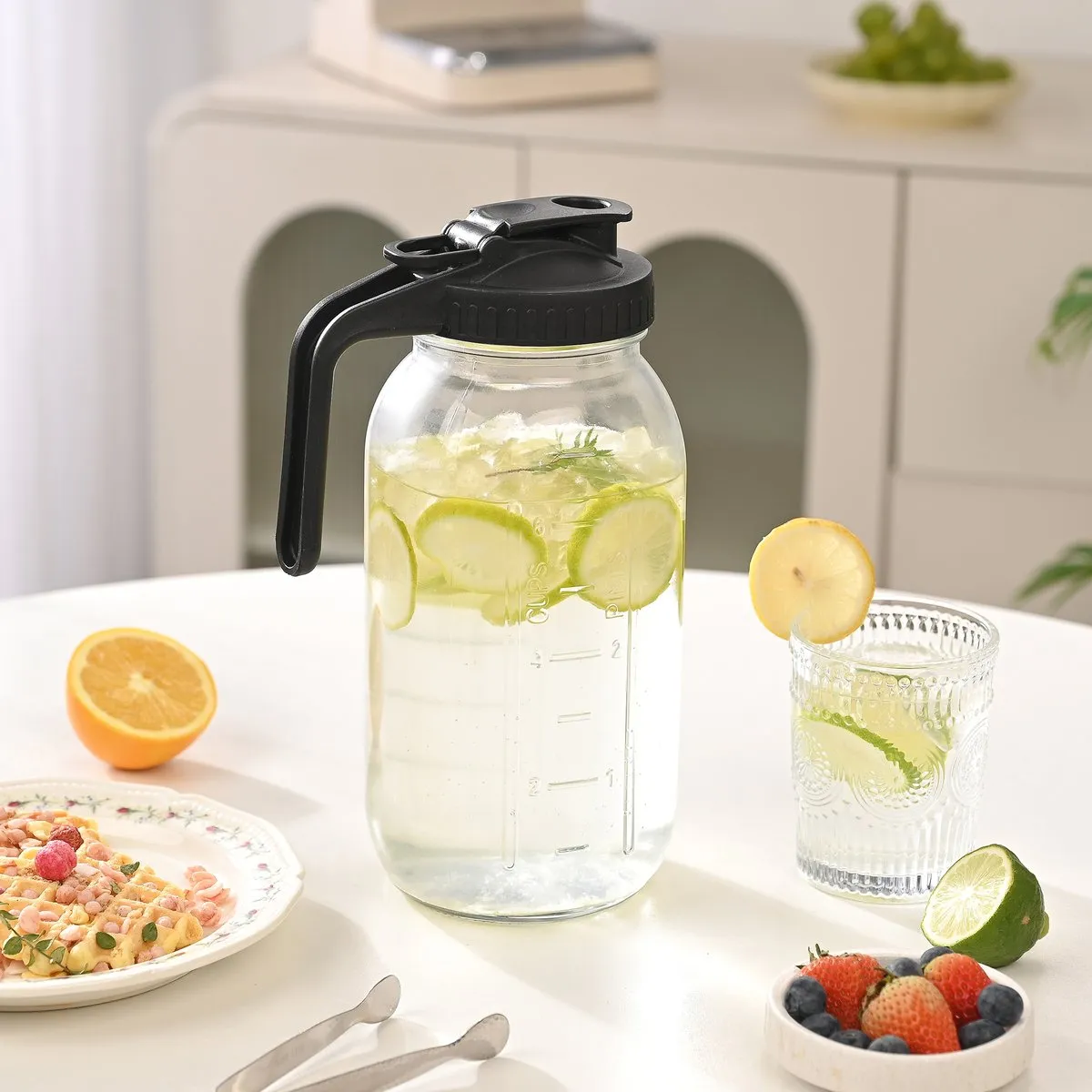 Photo: Mason jar, via cfrouting.zoeysite.com
All of that knowledge didn't disappear overnight when refrigerators arrived. But it began a slow, steady fade.
The Refrigerator Rewrites the Kitchen
Mechanical refrigerators for home use existed as early as the 1910s, but they were expensive, occasionally dangerous (early models used toxic refrigerants like sulfur dioxide and methyl formate), and far beyond the reach of most families. The real turning point came in 1927, when General Electric introduced the Monitor-Top — a sealed, relatively affordable unit that brought mechanical refrigeration to the mass market. Freon replaced the toxic gases. Prices dropped. By 1944, roughly 85 percent of American households that had electricity owned a refrigerator.
The shift was seismic, and it rippled outward in ways that went far beyond the kitchen.
Shopping patterns changed almost immediately. When food stayed fresh for days instead of hours, the daily market trip became unnecessary. Weekly grocery shopping — which feels ancient and traditional now — was actually a new behavior, made possible entirely by refrigeration. Supermarkets, which required customers to buy in volume, couldn't have succeeded without it.
Diet changed too. Seasonal eating — which had been a fixed constraint for most of human history — began its long retreat. Fresh produce from California could be shipped across the country in refrigerated rail cars. Milk could sit in a cold case for a week. The idea that you ate what was available locally and in season slowly became a lifestyle choice rather than a necessity.
And the communal rituals of food preservation — the canning bees, the shared smokehouse, the root cellar your neighbors helped you dig — began to fade as each household became its own self-contained cold-storage unit.
What We Traded Away
It would be easy to romanticize the icebox era, but let's be honest: food spoilage was a genuine hardship, and the labor of preservation fell almost entirely on women. Refrigeration freed up enormous amounts of time and reduced real suffering. The convenience is not nothing.
But there's something worth noticing in what disappeared alongside the daily battle to keep food cold. The iceman's route was a social network. The root cellar was a form of seasonal wisdom. Canning season was a reason for neighbors to gather. When the refrigerator quietly took over, it solved a problem — and dissolved a way of life at the same time.
That hum in your kitchen is the sound of a revolution. Most of us just forgot it was ever that loud.