Your Plate Had a Zip Code: When American Food Actually Came From America

When Geography Was Destiny
In 1950, if you ordered fried chicken in Charleston, it came with rice and gravy. In Kansas, it arrived with mashed potatoes and corn. In California, it might be accompanied by avocado and citrus — if you could find it at all, since fried chicken wasn't part of the traditional West Coast diet.
These weren't marketing decisions or cultural preferences. They were the natural result of geography, climate, and local agriculture shaping what people ate. Your dinner plate told the story of where you lived as clearly as your accent or your local newspaper.
Today, you can order the same Olive Garden breadsticks in Anchorage and Atlanta, the same McDonald's Big Mac in Portland, Maine and Portland, Oregon. The great flattening of American cuisine has erased food traditions that took centuries to develop, replacing them with a homogeneous menu available everywhere, always.
The Invisible Borders of American Cuisine
Before refrigerated trucking and interstate highways, America was a collection of distinct food regions, each shaped by climate, immigration patterns, and local agriculture. These culinary boundaries were as real as state lines, though far more delicious.
The South built its cuisine around rice, corn, pork, and whatever grew in the humid climate: okra, sweet potatoes, collard greens. Coastal Carolina meant seafood and rice. Inland Georgia meant pork and corn. Louisiana meant French and Spanish influences creating something entirely new.
New England's rocky soil and cold climate produced a different food culture entirely: root vegetables, preserved meats, dairy products, and whatever could be pulled from the Atlantic. Clam chowder wasn't a menu option — it was what you ate when you lived near clams.
The Midwest developed around grain production and livestock. Beef, pork, corn, and wheat formed the foundation of a hearty cuisine designed to fuel farm work. Casseroles weren't convenience food — they were efficient ways to feed large families with whatever was growing locally.
The West Coast, settled later and influenced by Spanish missions, Asian immigration, and a Mediterranean climate, created yet another distinct food culture built around fresh produce, seafood, and fusion cuisines.
When Seasons Ruled the Kitchen
Regional differences were intensified by seasonal limitations that modern Americans can barely imagine. Before year-round global shipping, your diet changed dramatically with the calendar.
Spring meant fresh greens after a winter of preserved foods. Summer brought tomatoes, corn, and stone fruits that had to be eaten immediately or preserved for later. Fall meant apple harvest, squash, and the work of preparing for winter. Winter meant relying on what you had stored: canned vegetables, cured meats, root vegetables stored in cold cellars.
Mary Patterson, who grew up on a farm in Iowa during the 1940s, remembers the rhythm: "We ate strawberries for three weeks in June, then didn't see them again until the next year. Tomatoes were a late summer treat. In January, we ate what we had canned or what kept in the cellar: potatoes, carrots, onions, apples. The first asparagus in spring felt like a miracle."
This seasonal eating wasn't a lifestyle choice — it was reality. The idea of eating strawberries in December or asparagus in October would have seemed as absurd as wearing shorts in a snowstorm.
The Highway Revolution
The transformation began with the Interstate Highway System, launched in 1956. Suddenly, food could travel efficiently across vast distances. Refrigerated trucking, developed during World War II, made it possible to ship perishable goods thousands of miles.
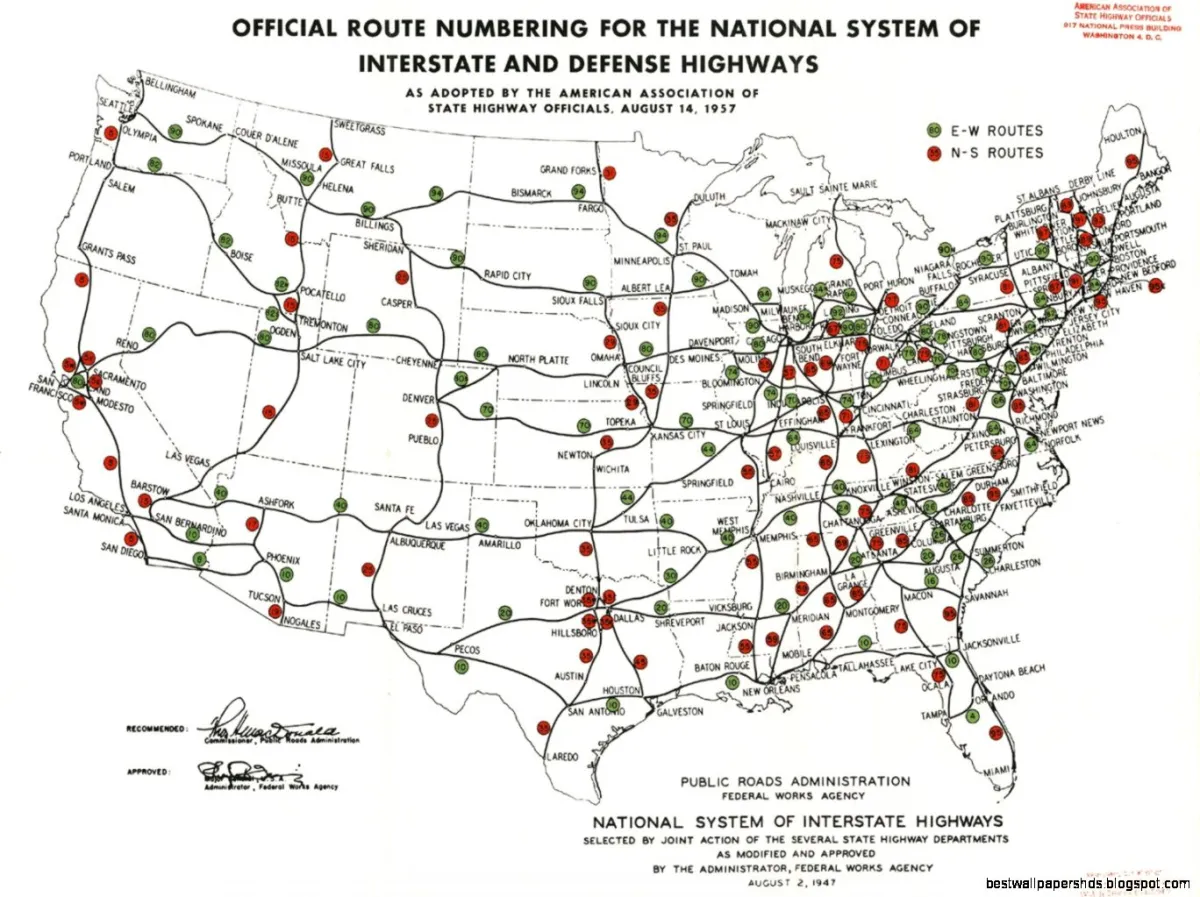 Photo: Interstate Highway System, via 3.bp.blogspot.com
Chain restaurants followed the highways. McDonald's, founded in 1955, built its business model on consistency: the same burger in every location. Howard Johnson's pioneered the concept of standardized menus across multiple states. Holiday Inn promised travelers familiar food no matter where they stopped.
This standardization was initially welcomed. After decades of unpredictable local restaurants, travelers appreciated knowing what to expect. Families moving between regions for work could find familiar foods in their new homes.
But standardization came with a cost: the erosion of local food traditions that had developed over generations.
The Supermarket Steamroller
National supermarket chains accelerated the homogenization of American eating. Instead of shopping at local butchers, bakers, and produce vendors who sold what was available locally, Americans began shopping at stores that carried the same products nationwide.
Regional specialties that couldn't be mass-produced and shipped efficiently disappeared from everyday eating. Local varieties of apples, developed over generations for specific climates, were replaced by a few varieties that shipped well. Regional sausages gave way to national brands. Local bakeries closed as supermarkets offered consistent, if less distinctive, bread.
The efficiency was remarkable. Americans gained access to foods that had never been available in their regions. But they lost the deep connection between place and plate that had defined American eating for centuries.
When Every Place Became Anyplace
Today's American food landscape would be unrecognizable to someone from 1950. The same chain restaurants line the highways from coast to coast. Applebee's serves "neighborhood" food that has no actual neighborhood. Subway offers "fresh" ingredients shipped thousands of miles.
The homogenization extends beyond restaurants to grocery stores. A Kroger in Kentucky stocks the same products as a Kroger in Colorado. Regional food companies have been absorbed by national conglomerates or driven out of business by economies of scale.
Even farmers' markets, supposedly celebrating local food, often feature vendors selling produce grown hundreds of miles away. The "local" label has become a marketing term rather than a geographic reality.
The Hidden Costs of Convenience
The nationalization of American cuisine brought undeniable benefits. Food became safer, more consistent, and more convenient. Americans gained access to cuisines from around the world. Grocery shopping became predictable regardless of location.
But the costs were subtler and deeper. Local food knowledge disappeared as older generations passed away without teaching traditional recipes and techniques. Regional ingredients became unavailable as demand disappeared. Local farms couldn't compete with industrial agriculture optimized for shipping.
The connection between place and food — understanding how geography, climate, and culture shaped what people ate — became an abstract concept rather than lived experience.
Dr. Sarah Mitchell, a food historian at the University of Georgia, explains: "When my grandmother cooked, she was expressing the accumulated knowledge of generations of Southern women. She knew which greens grew best in Georgia soil, how to preserve summer vegetables for winter, how to make the most of whatever was available locally. That knowledge is largely gone now. We've traded cultural wisdom for convenience."
What We Lost When Food Lost Its Address
The erosion of regional food traditions represents more than just culinary change. Food was one of the primary ways communities expressed their identity and passed down cultural knowledge.
Regional cuisines told stories: about immigration patterns, agricultural innovations, economic conditions, and cultural exchanges. New Orleans cuisine reflected French, Spanish, African, and Caribbean influences meeting in a unique geographic location. Tex-Mex showed what happened when Mexican traditions met American ingredients and cooking methods.
These stories disappeared when food became standardized. The chain restaurant meal tells no story except efficiency and profit margins. The supermarket tomato carries no information about the soil it grew in or the hands that picked it.
The Rediscovery Movement
Some Americans are working to rebuild connections between place and plate. The farm-to-table movement, despite its sometimes precious pretensions, represents a genuine attempt to restore local food systems. Community-supported agriculture programs connect consumers directly with local farmers.
Chefs like Sean Brock and Hugh Acheson have built careers around rediscovering and celebrating regional American cuisines. They research historical recipes, work with local farmers to grow heritage varieties, and educate diners about the food traditions of specific places.
Heirloom seed companies preserve varieties of vegetables developed for specific regions and climates. Artisan food producers create products that express the character of particular places rather than appealing to national markets.
The Flavor of Place
These efforts reveal what was lost when American food became nationalized: the understanding that the best food expresses the character of the place where it's grown and prepared.
A tomato grown in Georgia soil during a hot, humid summer tastes different from one grown in California's Central Valley or shipped from Mexico. Those differences aren't inconveniences to be eliminated through breeding and processing — they're expressions of terroir, the French concept that food should taste like the place it comes from.
Regional cuisines developed over generations as communities learned to make the most of their local ingredients and conditions. Kentucky bourbon tastes like Kentucky because of the limestone water, the climate, and the local corn varieties. Maine lobster rolls exist because Maine has lobsters and a tradition of simple preparation that lets the ingredient shine.
When Your Zip Code Determined Your Diet
The homogenization of American cuisine represents one of the most dramatic cultural changes of the past century, yet it happened so gradually that most people barely noticed. We gained convenience and lost identity. We gained consistency and lost the deep satisfaction that comes from eating food that tastes like home.
Restoring regional food traditions doesn't mean rejecting global cuisine or returning to the limitations of the past. It means recognizing that the best food tells a story about where it comes from, who grew it, and how it connects us to the place we live.
In a world where you can eat the same meal in any airport from Seattle to Miami, choosing to eat locally becomes an act of resistance — a way of saying that place still matters, that geography shapes more than just the weather, and that the best meals come not from corporate test kitchens but from the accumulated wisdom of people who understood that food should taste like home.
Your plate once had a zip code. Perhaps it's time it did again.