The Sabbath That Wasn't Religious: When America Legally Unplugged Every Sunday
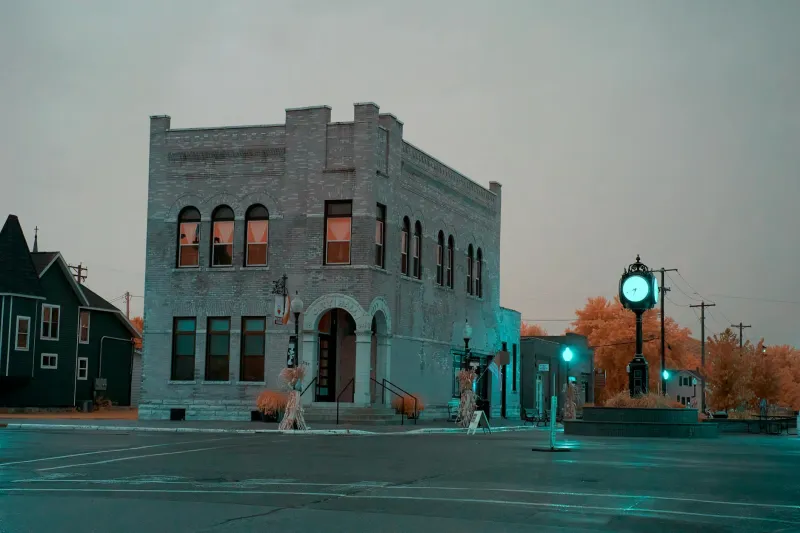
The Sabbath That Wasn't Religious: When America Legally Unplugged Every Sunday
Imagine if every store in America closed tomorrow. Every mall, every restaurant, every gas station. Imagine if shopping became impossible, errands couldn't be run, and commerce simply stopped for 24 hours. Sounds dystopian, right?
Yet for most of the 20th century, this happened every single Sunday across America. It wasn't a disaster — it was the law. And it created a rhythm of life so different from today that most Americans under 40 can barely imagine it.
The Laws That Stopped a Nation
Blue Laws — named after the blue paper they were originally printed on in colonial times — once governed Sunday commerce across virtually every American community. These weren't suggestions or traditions; they were legal requirements backed by fines, arrests, and court appearances.
In 1960, it was illegal to buy a car on Sunday in 49 states. You couldn't purchase alcohol in 47 states, furniture in 43 states, or appliances in 41 states. Many states prohibited the sale of everything except "necessities" — typically defined as food, medicine, gasoline, and newspapers. Some states were even stricter: in Massachusetts, you couldn't buy a toothbrush on Sunday until 1994.
These weren't relics from the 1800s gathering dust in legal books. They were actively enforced. Police officers wrote tickets for Sunday sales violations. Store owners paid fines or faced jail time. In 1961, a discount store manager in Maryland was arrested for selling a loose-leaf binder on Sunday. The case went all the way to the Supreme Court.
The Rhythm of Forced Rest
What did this mandatory shutdown actually look like? Picture Sunday morning in 1965: downtown areas that buzzed with activity six days a week became ghost towns. Parking lots sat empty. Shopping districts fell silent. The only businesses open were churches, restaurants (in some areas), and gas stations (for emergencies only).
Families couldn't run to the store for forgotten ingredients or last-minute supplies. If you needed something on Sunday, you either planned ahead or did without. This forced planning created a different relationship with consumption — purchases required forethought, and impulse buying was literally impossible one day per week.
The silence was profound. Without the hum of commerce, Sundays had a different sound. You could hear church bells from blocks away. Children played in empty parking lots. Families walked through downtown areas that were usually too busy for pedestrians.
The Unintended Social Engineering
Blue Laws were originally rooted in Christian tradition, but their effects transcended religion. They created a shared cultural experience that unified Americans regardless of their faith. Jewish families, Muslim families, atheist families — everyone participated in the Sunday slowdown because there was literally no alternative.
This forced synchronization had profound effects on family life. With stores closed and entertainment options limited, families defaulted to spending time together. Sunday became the day for extended meals, backyard activities, visiting relatives, or simply sitting on front porches. The absence of commercial alternatives made family time less of a choice and more of a natural consequence.
For children, Sundays meant boredom — the productive kind of boredom that leads to creativity. Without the option to go shopping or run errands, kids were left to their own devices: board games, pickup sports, building forts, reading books. The day stretched out with unstructured time that modern children rarely experience.
The Economic Pause
The business community initially supported Blue Laws because they leveled the playing field. If everyone had to close on Sunday, no one gained a competitive advantage by staying open. Small business owners got a guaranteed day off without losing customers to competitors. Employees knew they'd have at least one day per week when work was legally impossible.
This created a different relationship between work and life. The boundary was absolute and non-negotiable. You couldn't be called into work on Sunday because work wasn't happening. Employers couldn't ask employees to run work-related errands because stores weren't open. The separation was complete and legally protected.
For retail workers, Blue Laws meant guaranteed family time. Department store clerks, gas station attendants, and restaurant servers knew they'd have Sundays off (except in the limited businesses allowed to operate). This wasn't a benefit negotiated by unions — it was mandated by law.
The Cracks in the System
The first challenges to Blue Laws came from unexpected sources. Jewish business owners argued that closing on Sunday violated their religious freedom — they already closed on Saturday for the Sabbath and couldn't afford to lose two days of business per week. The Supreme Court ruled against them in 1961, but the case highlighted the laws' inherent bias toward Christian tradition.
Tourism created another pressure point. Beach towns and resort areas lobbied for exemptions, arguing that visitors expected entertainment and shopping options. Gradually, "tourist districts" gained permission to operate on Sundays, creating the first cracks in the uniform shutdown.
The real pressure came from changing lifestyles. As more women entered the workforce and family schedules became more complex, the demand for weekend shopping grew. Two-career families needed Sunday as a catch-up day for errands that couldn't be accomplished during the week.
The Dominoes Fall
The dismantling of Blue Laws accelerated in the 1970s and 1980s. States repealed restrictions industry by industry: first alcohol sales, then car sales, then general merchandise. The arguments were always economic — increased tax revenue, consumer convenience, business competition.
By 1990, most comprehensive Blue Laws had disappeared. A few restrictions lingered: some states still prohibit car sales on Sunday, and many counties restrict alcohol sales. But the broad shutdown that once characterized American Sundays had largely ended.
The last holdouts were surprising. Massachusetts didn't allow Sunday furniture sales until 1994. Bergen County, New Jersey, still prohibits most Sunday retail sales today — one of the few remaining examples of comprehensive Blue Laws in America.
 Photo: Bergen County, New Jersey, via www.shutterstock.com
What We Gained and Lost
The death of Blue Laws brought obvious benefits: convenience, economic growth, personal freedom. Families could shop when it worked for their schedules. Businesses could maximize revenue. Consumers had more choices.
But the losses were subtler and harder to measure. We lost the shared rhythm that once unified American communities. We lost the guaranteed pause that forced families together and individuals to rest. We lost the boundary that separated work time from life time.
Most significantly, we lost the experience of collective downtime. Today's Sunday is indistinguishable from any other day — stores open, errands possible, commerce flowing. The idea that an entire society might simply stop for 24 hours now seems impossible, even dystopian.
The Modern Sabbath Deficit
As we grapple with issues like work-life balance, family disconnection, and the mental health costs of constant connectivity, the old Blue Laws look almost prophetic. They forced behaviors that we now pay therapists and life coaches to help us achieve: regular rest, family time, disconnection from commerce.
The wellness industry sells us expensive solutions to problems that Blue Laws solved with simple prohibition. Meditation apps try to create the silence that once came naturally on Sunday mornings. Family counselors encourage the togetherness that was once legally mandated. Digital detox retreats charge premium prices for the disconnection that was once free and universal.
The Day We Forgot How to Stop
Blue Laws represented something profound: the idea that a society could collectively agree to pause, that economic activity wasn't the highest value, that rest and reflection deserved legal protection.
When we repealed those laws, we didn't just gain the freedom to shop on Sunday — we lost the freedom from shopping on Sunday. We gained convenience and lost something harder to define but impossible to replace: the shared experience of stopping, the collective exhale, the knowledge that for 24 hours, the entire machine of commerce would simply wait.
The next time you find yourself running errands on a Sunday, remember when that wasn't possible. Remember when America legally unplugged, when families had no choice but to spend time together, when rest wasn't a luxury but a law.
We called it progress when we gave up that forced sabbath. But maybe we just forgot how to stop.