Needle and Thread Nation: When Every American Kitchen Had a Sewing Machine
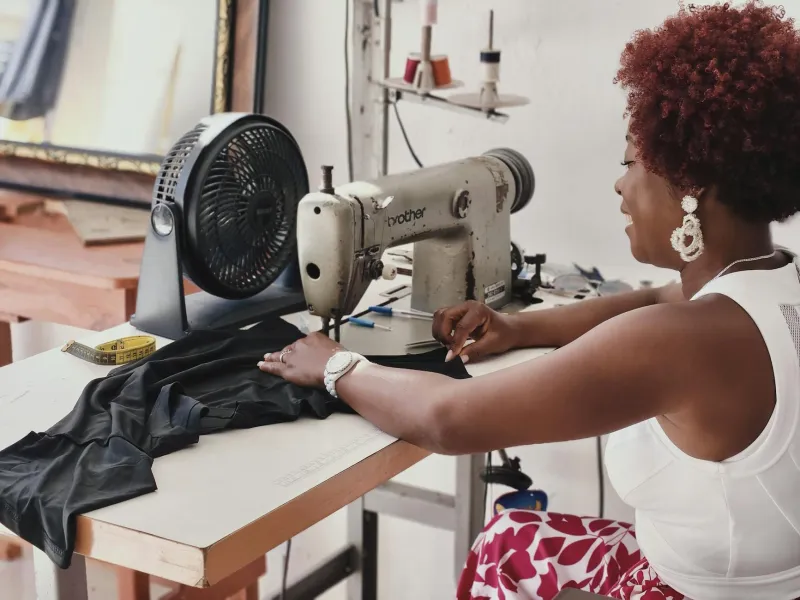
Open any American woman's closet today, and you'll find clothes made in Bangladesh, Vietnam, and Guatemala. Open her grandmother's sewing basket, and you'll find something far more remarkable: the tools that once dressed an entire nation, one careful stitch at a time.
In 1960, nearly 90% of American women could operate a sewing machine. Today, that number has dropped to less than 15%. This isn't just a statistic about hobby skills — it's the story of how America outsourced one of humanity's most basic needs and forgot what we lost in the process.
The Department Store's Secret Floor
If you walked into any major department store in 1955, you'd climb past the cosmetics, past the jewelry, past the ready-made dresses, to find the most important floor: fabrics and notions. Here, bolts of cotton, wool, and silk lined the walls like a rainbow library. Pattern books thick as phone directories offered hundreds of designs for every season, every occasion, every budget.
Women spent hours here, feeling fabrics, comparing patterns, calculating yardage with the precision of architects. The fabric department wasn't just another section — it was command central for family clothing production. Sales clerks weren't just cashiers; they were consultants who knew which fabrics worked with which patterns, how much extra to buy for growing children, and which shortcuts could save money without sacrificing quality.
Macy's Herald Square devoted an entire floor to home sewing. Sears dedicated 40 pages of their catalog to patterns, fabrics, and sewing supplies. Montgomery Ward employed fabric experts who could answer technical questions about everything from bias cuts to buttonhole techniques. These weren't niche markets — they were essential infrastructure for how Americans got dressed.
 Photo: Montgomery Ward, via volkswagen.autoua.net
 Photo: Macy's Herald Square, via images.tcdn.com.br
The Economics of Necessity
Home sewing wasn't a hobby in 1950 — it was economics. A store-bought dress cost $12, nearly a full day's wages for many families. The same dress made at home cost $3 in materials and took an evening's work. For families with multiple children, the math was simple: learn to sew or go broke trying to stay clothed.
But the economics went deeper than just saving money. Home sewing meant clothes that actually fit. Store sizes were limited and inconsistent. If you were tall, short, broad-shouldered, or anything other than perfectly average, ready-made clothes were a compromise at best. Making your own meant getting exactly what you needed, exactly how you needed it.
Mothers didn't just sew for themselves — they sewed for entire families. A skilled home seamstress could turn one adult's worn-out coat into winter jackets for two children. Fabric scraps became quilts, pot holders, and doll clothes. Nothing was wasted because waste was a luxury families couldn't afford.
The Classroom in Every Home
The knowledge transfer that happened around sewing machines was profound and systematic. Girls learned to thread needles before they learned to read. They graduated from hemming dish towels to making their own school clothes. By high school, most could draft their own patterns and alter store-bought clothes to fit perfectly.
This wasn't just about technical skills — it was about understanding how things were made. A girl who sewed her own clothes knew why certain fabrics cost more, why some designs lasted longer, and how construction details affected both appearance and durability. She could look at any garment and estimate its quality, its cost, and its lifespan.
High school home economics classes taught advanced techniques: tailoring, pattern drafting, fabric selection. These weren't electives — they were considered essential life skills, as important as math or English. Girls who couldn't sew were considered unprepared for adult life, like boys who couldn't change a tire.
The Creativity Revolution
Home sewing fostered a creativity that's almost unimaginable today. When you made your own clothes, every garment was a design decision. Color combinations, fabric choices, detail modifications — each piece reflected individual taste and skill level.
Pattern companies like Simplicity, McCall's, and Butterick were the fashion magazines of their era. New patterns arrived seasonally like movie releases, promising the latest styles adapted for home construction. Women would modify patterns, combine elements from different designs, and create truly unique wardrobes.
This creativity extended to children's clothes, where mothers could indulge fantasies impossible to find in stores. Halloween costumes, party dresses, matching sibling outfits — if you could imagine it, you could make it. Children grew up understanding that clothes were expressions of creativity, not just products to be purchased.
The Great Efficiency Trade
So what happened to this massive, skilled, creative workforce? The same thing that happened to most American manufacturing: it got outsourced to countries where labor was cheaper and regulations were looser.
The transformation was remarkably fast. In 1965, most American clothing was still made in America. By 1985, most was made overseas. As prices dropped and selection exploded, home sewing shifted from necessity to hobby. Why spend a weekend making a dress when you could buy three for the same price?
The sewing machine moved from the kitchen to the basement, then to garage sales and thrift stores. Department stores eliminated fabric departments. Pattern companies consolidated and simplified their offerings. The infrastructure that once supported a nation of home seamstresses quietly disappeared.
What We Gained and Lost
The benefits of this shift are obvious: cheaper clothes, more variety, less time spent on tedious handwork. A modern American can own more clothes than a 1950s family could imagine, spending a smaller percentage of income on a larger, more diverse wardrobe.
But the losses are profound and often invisible. We lost the deep understanding of how things are made, why they cost what they cost, and how to evaluate quality. We lost the ability to modify, repair, and customize. We lost the satisfaction of creating something useful with our own hands.
Most significantly, we lost control. When you could make your own clothes, you controlled quality, fit, style, and cost. You could repair instead of replace, modify instead of discard, create instead of just consume. That self-sufficiency represented a kind of freedom that's hard to quantify but impossible to replace.
The Environmental Reckoning
Today, as we grapple with fast fashion's environmental costs and labor practices, the old sewing skills look prophetic. Every garment made at home was, by definition, slow fashion. Every repair extended a garment's life. Every modification prevented waste.
The average American now buys 68 garments per year and throws away 81 pounds of clothing annually. In contrast, the average 1950s wardrobe contained fewer than 30 pieces, most worn until they literally fell apart, then converted into cleaning rags or quilt squares.
The Thread That Connected Us
Home sewing represented more than just a practical skill — it was a connection to the physical world, to the process of creation, to the satisfaction of making something useful and beautiful with your own hands. It was a form of literacy that allowed people to read the language of construction, quality, and value.
When we gave up our needles and thread, we gained convenience but lost fluency in one of humanity's most basic technologies. We became consumers instead of creators, buyers instead of makers.
The next time you check a clothing label and see "Made in Vietnam," remember that it once might have read "Made by Mom." The difference isn't just geographic — it's philosophical, representing a fundamental shift in how Americans relate to the most basic human need of staying clothed.