When a Ten-Dollar Bill Could Get the Whole Table Fed: The Economics of Eating Out Before It Got Complicated
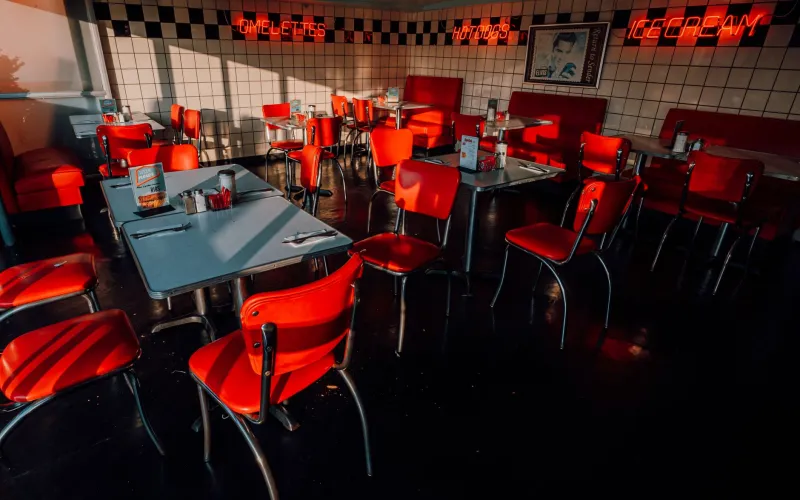
Pull up a menu from a mid-century American diner and the prices look like a misprint. A full plate of meatloaf with mashed potatoes and a side of green beans: sixty cents. A burger, fries, and a Coke: forty-five cents. A slice of apple pie: a dime. The numbers are so small they barely register as money at all by today's standards.
But those prices weren't a quirk of history. They reflected a world where eating out was genuinely accessible to ordinary working families — not a luxury, not a special occasion, not something that required scanning the menu for the cheapest option and quietly doing the math in your head.
Something changed. Actually, a lot of things changed. And the story of how a simple family dinner became a financial calculation is worth understanding.
What a Dollar Actually Bought
In 1955, the federal minimum wage was seventy-five cents an hour. A full blue-plate dinner at a typical American diner — soup or salad, an entrée, a side, bread, and coffee — ran somewhere between sixty cents and a dollar twenty-five. That meant a minimum-wage worker could, in theory, buy a complete restaurant meal for roughly one hour's pay.
Run the same calculation today. The federal minimum wage sits at $7.25 an hour, though many states have pushed it higher. A comparable sit-down meal at a mid-range casual dining restaurant — nothing fancy, just the Applebee's or Chili's equivalent of the local diner — will typically cost somewhere between $14 and $22 before tip. That's two to three hours of work for a single meal.
For a family of four, the gap is even more striking. A 1960s family could dine out at a neighborhood restaurant for roughly three to five dollars total. Adjusted purely for inflation, that's about $30 to $40 today. But the actual cost of that same experience — a sit-down meal for four at a casual restaurant — is now typically $80 to $120, often more in urban areas.
Something beyond inflation is happening here.
The Labor Equation
Restaurant economics have always been tight, but the pressure on labor costs has intensified dramatically. For most of the 20th century, tipped restaurant workers were paid a fraction of minimum wage, and the expectation was that tips would make up the difference. The tipped minimum wage at the federal level is still $2.13 an hour — a number that hasn't changed since 1991. But the social contract around tipping has shifted enormously.
In the 1950s and 60s, a ten percent tip was considered generous. Today, fifteen percent is the floor, twenty percent is standard, and many digital payment systems now default to prompts starting at twenty-five percent. The total cost of a meal has absorbed a significant labor subsidy that simply didn't exist at the same scale before.
Beyond tips, the restaurant workforce has changed. Labor shortages — especially acute after the pandemic reshuffled the service industry — pushed wages up across the board. Many states and cities now mandate $15 or more per hour for all restaurant workers. That's not a bad thing for workers. But it does mean the economics of keeping a plate of meatloaf at sixty cents are simply gone.
Real Estate and the Price of a Booth
Here's a factor that doesn't make it onto the menu but absolutely makes it into the price: commercial real estate. A diner in a small American town in 1955 might have been paying a few hundred dollars a month to lease its space. Today, a comparable footprint in even a mid-sized city can cost $5,000 to $15,000 a month or more, depending on location.
Restaurants in urban cores — exactly the places where people most want to eat out — face some of the highest commercial rents in the country. Those costs don't disappear. They get priced into the burger.
Supply Chains and the Modern Plate
The food itself costs more too, and not just because of general inflation. The mid-century American restaurant ran on local supply chains almost by necessity. The vegetables came from nearby farms. The meat came from regional processors. Transportation costs were minimal because the distances were short.
Modern restaurant supply chains are vastly more complex. Ingredients are often sourced nationally or internationally, passing through multiple distributors before they reach the kitchen. Food safety regulations — many of them genuinely important — add compliance costs. Packaging, refrigeration, and logistics all add up. The tomato on your plate today has traveled further and touched more hands than the tomato on your plate in 1962.
What We Expect Now vs. Then
Consumer expectations have also quietly inflated the cost of dining out. The mid-century diner was a simple proposition: food, a seat, and reasonably fast service. Today's casual dining experience involves a designed interior, a curated playlist, a craft cocktail menu, a social media-ready presentation, and often a QR code linking to a digital menu that costs money to maintain.
None of that is free. And most of it didn't exist.
The Meal That Changed Meaning
Perhaps the most telling shift isn't in the prices themselves but in what eating out now represents. For working-class families in the postwar decades, a restaurant dinner was a regular pleasure — not a splurge, not a treat reserved for birthdays and anniversaries, just a normal Tuesday option. The accessibility of it was part of what made it enjoyable.
Today, for many American families, a sit-down restaurant meal is a genuine budget decision. Fast food has filled the affordability gap, but it isn't the same experience. The diner booth, the unhurried waitress with the coffee pot, the sense that this was just what people did on a Friday night — that version of dining out has moved upmarket, out of reach for a growing number of households.
The food got better in many ways. The options expanded dramatically. But somewhere along the way, the simple pleasure of sitting down in a restaurant without doing the math quietly became a luxury. And most of us barely noticed it happen.