Nobody Was Looking at a Screen: The Strange Social Life of the Old Waiting Room
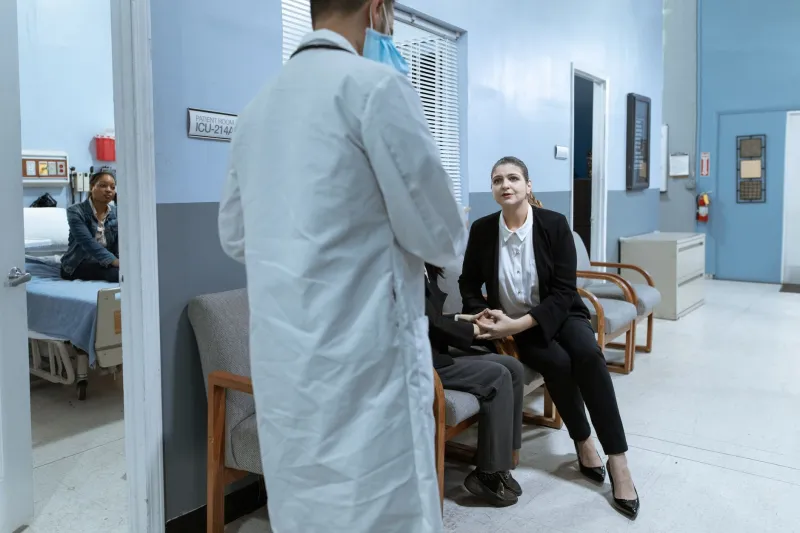
Walk into most doctor's offices today and you'll notice something odd. A room full of people, and not a single conversation happening. Everyone is bent over a phone, earbuds in, eyes down, doing everything possible to signal that they are unavailable. It's efficient in its own strange way — nobody bothers you, nobody expects anything from you, and the time passes in a kind of comfortable numbness.
But it wasn't always like this. And the difference matters more than you might think.
The Room That Ran on Small Talk
For most of the 20th century, the waiting room was an accidental community center. You'd walk in, grab a dog-eared copy of Life or Reader's Digest from the pile on the side table, and within a few minutes, someone would say something. Maybe they'd comment on the weather. Maybe they'd ask how long you'd been waiting. Maybe they'd recognize you from church or the grocery store and suddenly twenty minutes would disappear into a conversation about kids, gardens, or the new road construction on Route 9.
This wasn't forced. Nobody organized it. It just happened because that's what people did when they were in the same room with nothing but time on their hands. The waiting room — along with the barbershop, the laundromat, and the front porch — was one of those informal public spaces where American community quietly maintained itself without anyone planning it that way.
People exchanged home remedies. They recommended doctors. They warned each other about the one pharmacist who always seemed rushed. An elderly woman might have told you her husband had the same symptoms and what the doctor had said. A parent might have offered reassurance to a younger mom whose child looked nervous. These weren't deep friendships. But they were real human contact — the kind that made you feel less alone in an experience that can feel pretty isolating.
What Was Actually in Those Magazines
The shared magazines deserve their own moment of attention. Today, the idea of picking up a publication that twenty other people have already handled feels mildly alarming. But for decades, those stacks of well-worn Good Housekeeping, Sports Illustrated, and National Geographic issues were part of the social fabric of the waiting room. You'd flip through one, someone would lean over and say "oh, did you see the piece on page forty?" and suddenly you had a conversation.
The magazines were communal property in the most literal sense. They weren't yours. They weren't theirs. They belonged to the room. That shared ownership of something — even something as small as a magazine — created a tiny but real sense of community. You were all in the same situation, waiting on the same kind of news, and passing the time together.
The Slow Disappearance
The shift didn't happen overnight. Through the 1980s and into the 1990s, waiting rooms started getting televisions mounted in the corner — an early sign that someone had decided people needed to be entertained rather than left to their own social devices. The TV pulled eyes away from each other and toward a screen. Conversation got harder. The background noise of a daytime talk show made it easier to just sit quietly.
Then came the smartphone. When the iPhone arrived in 2007, it handed every person in every waiting room a personal escape hatch. Within a few years, the idea of sitting in a waiting room without your phone felt almost unthinkable. Why would you make small talk with a stranger when you could scroll through your Instagram feed, text your sister, or watch a YouTube video?
The answer — and it's one we've largely stopped asking — is that the small talk with the stranger was doing something the YouTube video cannot. It was reminding you that you exist in a community. That other people have lives, concerns, and stories. That the world is bigger than your own feed.
Efficiency Over Connection
Healthcare itself has also changed in ways that stripped the waiting room of its social role. Appointment systems got tighter. Patient throughput became a metric. The goal shifted toward minimizing wait times rather than managing them. Some practices moved to text alerts that let you wait in your car and come in only when the room was ready. That's genuinely more comfortable in many ways — but it also means you never sit next to anyone at all.
The COVID-19 pandemic accelerated this further. Waiting rooms were emptied out, patients were staggered, and telehealth surged. Many of those changes made sense for safety. But they also formalized what had already become the norm: medical care as a transaction between you and a provider, with no social context around it.
What We Actually Lost
It would be easy to dismiss this as nostalgia — a longing for a time when people had no choice but to talk to each other. But there's real research suggesting that casual social contact, the kind that happens without planning or purpose, has meaningful effects on mental health and community cohesion. Sociologists call it "weak ties" — the loose connections between people who aren't close friends but who share a neighborhood, a waiting room, a bus route. Those weak ties turn out to matter a lot for how connected people feel to their communities.
We didn't decide to get rid of the social waiting room. It just faded, piece by piece, replaced by screens and systems and a culture that increasingly treats public space as something to be endured rather than inhabited.
The next time you're sitting in a doctor's office, phone in hand, consider looking up. The person across from you is waiting for the same kind of news you are. They might have something interesting to say. They almost certainly have a story worth hearing.
Or you could keep scrolling. The choice is yours — which is exactly the problem.