The House That Became an Office: How Remote Work Quietly Stole the American Home
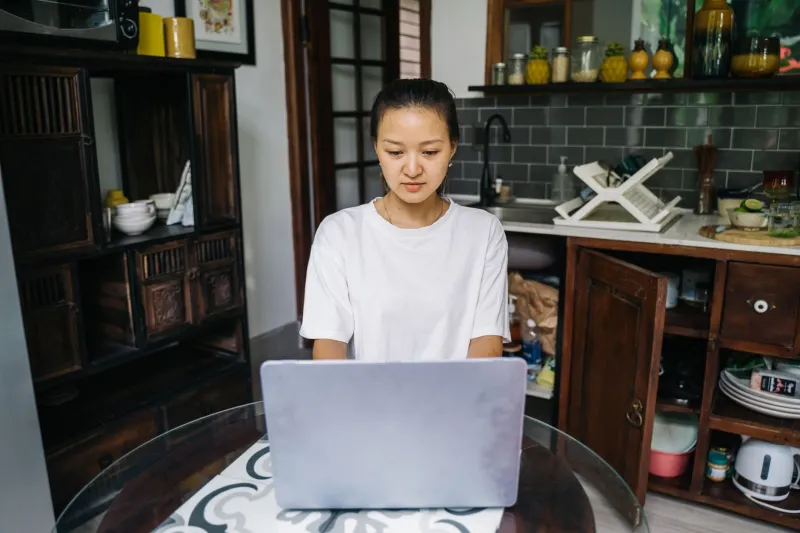
Sometime in late March 2020, millions of Americans carried their laptops home from the office and set them on kitchen tables, dining room chairs, and the corners of bedrooms — intending to stay for a few weeks. More than five years later, a significant portion of them are still there. The laptop never left. And in a very real sense, neither did the office.
The transformation of the American home from private refuge to professional workspace is one of the most significant — and least fully examined — shifts in how Americans live. It didn't arrive with a press release. It crept in through a pandemic, settled into the architecture of daily life, and quietly renegotiated the terms of what home is supposed to mean.
What Home Used to Mean
For most of the 20th century, the American home was defined in large part by what it wasn't. It wasn't the office. It wasn't the factory floor. It wasn't the place where your boss could reach you at 9 p.m. The physical separation of home and work wasn't just logistical — it was psychological. You left work at work. You came home and became a different version of yourself: a parent, a spouse, a neighbor, a person with hobbies and a lawn to mow.
The commute, much maligned, served a function that nobody fully appreciated until it was gone. It was transition time. Forty minutes on the highway or a train ride into the city was a decompression chamber — a buffer zone between professional identity and personal life. You could listen to the radio, think about nothing, and arrive home as someone who had, at least temporarily, left work behind.
The home itself reflected this separation. The design of American houses through the postwar decades — the den, the family room, the backyard — was built around the idea of recovery and leisure. These were spaces engineered for rest, for children, for the kind of unstructured time that recharges a person. The home office, where it existed at all, was a small, separate room — a concession to the occasional evening of paperwork, not a second headquarters.
The Slow Erosion Before the Flood
It would be wrong to say the pandemic created the work-from-home problem from scratch. The erosion of work-life boundaries had been underway for years before COVID arrived.
The smartphone, introduced to mass American culture in 2007, was the first serious breach in the wall. Suddenly, the office email was in your pocket at the dinner table. The after-hours Slack message arrived while you were putting the kids to bed. The expectation of availability — once confined to certain high-pressure professions — began spreading across the workforce. By 2019, a significant share of American workers were already checking work communications outside of office hours, often without being explicitly asked to.
But the office building still existed. You still physically left home in the morning. The separation was compromised but not yet demolished.
Then it was demolished. Overnight, for tens of millions of workers.
The Zoom Room and What It Cost
The real estate implications of the remote work shift were immediate and dramatic. Demand for home office space exploded. Suburban and rural markets surged as workers, freed from the daily commute requirement, began prioritizing square footage over proximity to the city center. The extra bedroom became the most valuable room in the house. Real estate listings that once would have described a room as a "guest bedroom" started calling it a "home office" — and buyers paid a premium for it.
But beneath the market dynamics, something more personal was happening inside those homes. Spaces that families had organized around rest and togetherness were being colonized by work. The kitchen table where kids did homework became the morning meeting venue. The living room couch became the backdrop for afternoon video calls. The bedroom — historically the most private space in American domestic life — became, for many people, the place where they answered emails at 11 p.m.
Child psychologists and family therapists began noting something they hadn't seen before: children struggling to understand why a parent was physically present but professionally unavailable. The visual cues that once clearly communicated "I'm at work" — the suit, the commute, the empty house — no longer existed. Dad was home, but Dad was also somehow not home. The boundary confusion wasn't just the parent's problem. It belonged to the whole household.
The Always-On Expectation
What remote work revealed — and in many ways accelerated — is an uncomfortable truth about American workplace culture: it was never entirely comfortable with the idea of employees being genuinely unreachable.
The commute home used to function as a natural, socially accepted reason for being unavailable. "I'm on my way home" was a complete sentence that required no further justification. Remote work removed that excuse without replacing it with anything. When you're already home, what's the reason for not responding to a message? The logic of remote availability has no natural stopping point.
Surveys conducted in the years following the pandemic's initial remote work surge consistently showed that remote workers were logging more hours than their in-office counterparts — not because they were more dedicated, but because the end of the workday had become genuinely ambiguous. Without a physical departure, the psychological departure never fully happened.
The Space Between Work and Rest
The most quietly radical thing about the shift to remote work is what it did to the American concept of being "off the clock." That phrase — so embedded in the culture that it became a cliché — assumed a clock that you could actually step away from. It assumed a location you could leave.
For a growing number of Americans, neither of those things is true anymore. The clock is on the phone on the nightstand. The location is the same place you sleep.
This isn't an argument against remote work — the flexibility it offers has been genuinely life-changing for many people, particularly working parents, caregivers, and those with disabilities. The elimination of the commute has returned real time to real lives. These gains are not trivial.
But the home was built — physically, culturally, emotionally — to be a place of recovery. When it becomes the place of production as well, something has to give. The question America is still working out is what, exactly, we're willing to let go of — and whether we'll recognize what we've lost before it's too late to design something better.
The laptop is still on the kitchen table. The boundary is still blurry. And home, for better and worse, will never mean exactly what it used to.