When You Packed Your Good Suit for the Airport: The Era When Getting There Was Part of the Experience
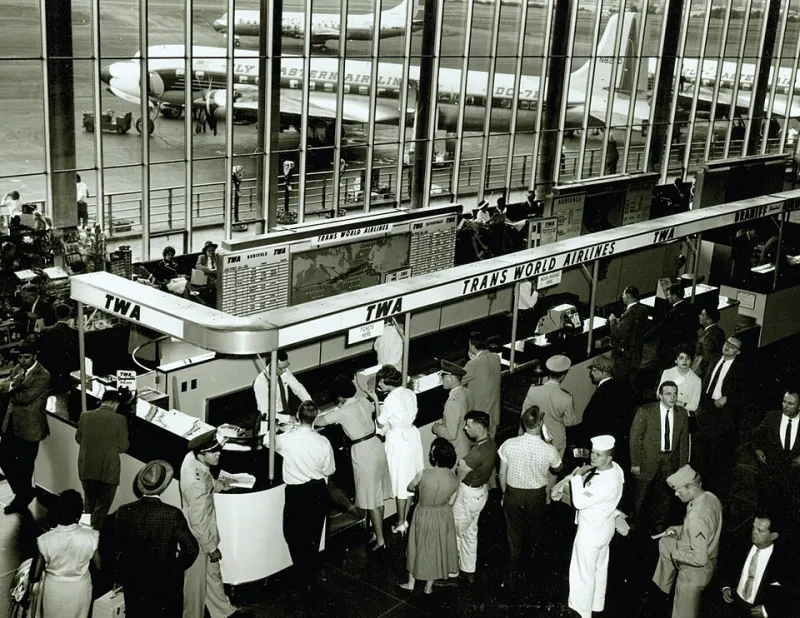
Photo: FAA, Public domain, via Wikimedia Commons
If you flew commercially in America between the late 1950s and the mid-1970s, you dressed for it. Not business casual. Not athleisure. You dressed the way you'd dress for a dinner party at someone's home you wanted to impress — because that, culturally speaking, is roughly what air travel felt like. A suit for the men. A dress or a smart skirt set for the women. Children in their church clothes. You weren't just going somewhere. You were participating in something.
Fast forward to any American airport on any Tuesday in 2024, and you'll find a different tableau entirely: slides and hoodies, noise-canceling headphones worn like a social force field, neck pillows deployed before anyone has even boarded. Both pictures are real. The distance between them is enormous. And understanding how we got from one to the other reveals something interesting about how Americans think about public life, shared space, and what we owe the strangers around us.
When a Plane Ticket Was a Status Symbol
The context matters enormously here. In the early decades of commercial aviation, flying was genuinely expensive — so expensive that it was effectively restricted to the upper-middle class and above. A round-trip ticket from New York to Los Angeles in 1955 cost the inflation-adjusted equivalent of over $1,500 today, and that was for coach. The passengers on those flights were, by definition, people for whom appearance and social comportment were deeply habituated values.
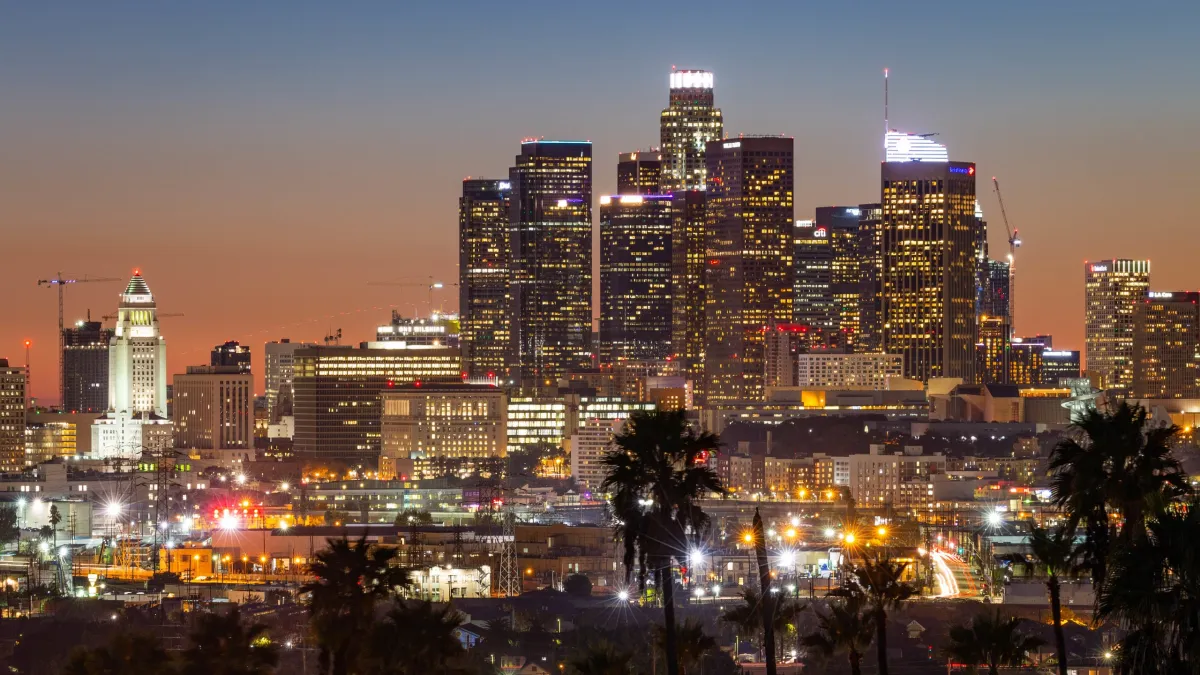 Photo: Los Angeles, via a.travel-assets.com
But it wasn't just about class. It was about the meaning assigned to the act of flying itself. Aviation was still relatively new, still tinged with wonder and a faint undercurrent of danger. Getting on an airplane was an event. Families came to the gate to see travelers off — the gate, not the curb. Stewardesses (as they were called) were trained in etiquette and service to a standard that rivaled fine dining. The cabin was a social environment with its own implicit code of conduct, and passengers generally honored it.
Train travel in the same era carried similar expectations, especially for longer journeys. The dining car had tablecloths. Passengers dressed for dinner. Conversation with strangers was considered part of the experience, not an intrusion to be warded off with headphones.
Deregulation Changed Everything
The single most consequential turning point in the story of American travel culture was the Airline Deregulation Act of 1978. Before deregulation, the Civil Aeronautics Board set fares and routes, keeping prices high and the passenger pool relatively exclusive. After deregulation, airlines competed on price, and the race to the bottom — in fares, and eventually in the overall experience — began in earnest.
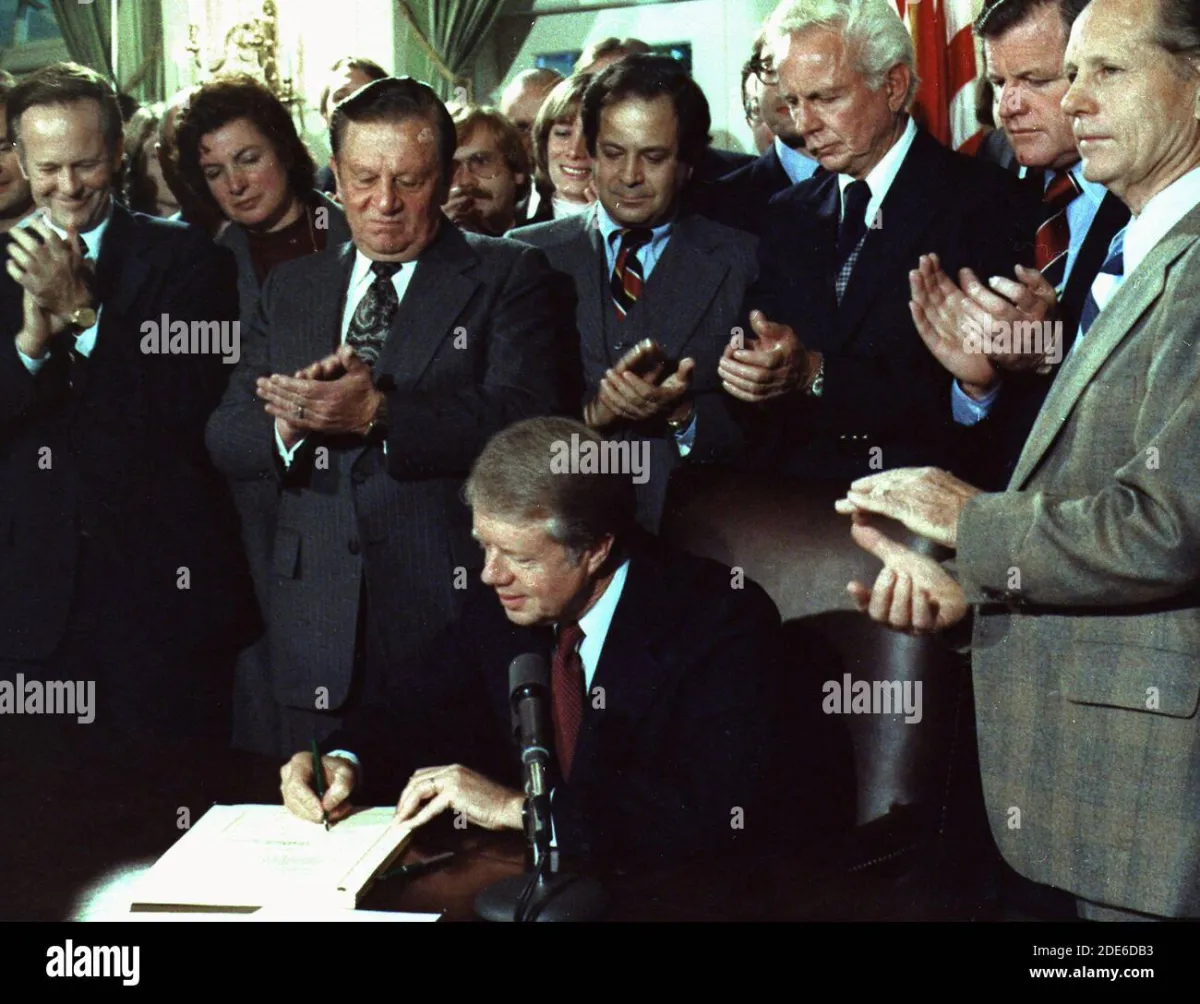 Photo: Airline Deregulation Act of 1978, via c8.alamy.com
By the 1980s, flying had become accessible to a much broader cross-section of Americans. That democratization was genuinely good. More people getting to more places is, on balance, a positive development. But it also meant that the shared social norms that had governed air travel — norms built by a relatively homogeneous, affluent passenger class — were suddenly being applied to a much more diverse group of people who hadn't necessarily been socialized into them.
The dress code didn't survive the transition. Neither did many of the behavioral expectations. By the 1990s, the idea of putting on a blazer for a flight from Cincinnati to Phoenix had started to feel faintly absurd to most Americans. Comfort had become the dominant value, and the airplane had been reclassified in the cultural imagination from a special occasion to a bus with altitude.
The Casualization of Everything
Air travel didn't change in isolation. It was part of a sweeping casualization of American public life that accelerated through the last quarter of the twentieth century. Dress codes at restaurants loosened. Business attire at the office gave way to business casual, then to casual casual, then to whatever you want as long as you show up. The formality that once structured public behavior — the unspoken agreement that shared spaces deserved a certain effort — gradually dissolved.
Sociologists who study this shift point to several converging forces: the rise of individualism and personal comfort as supreme values, the influence of youth culture on mainstream norms, the flattening of class distinctions in certain visible ways, and the broader American suspicion of anything that smells like imposed hierarchy or pretension.
There's something genuinely appealing about all of that. Nobody should have to suffer in a wool suit for a six-hour flight because society demands it. The comfort revolution in travel has real benefits — physical and psychological — for the people who get to participate in it.
But Something Did Get Left Behind
Here's the part that's worth sitting with, though. The formality of the old travel culture wasn't only about class performance or social gatekeeping. It was also about something more interesting: the acknowledgment that a shared journey is a shared experience, and that the people around you deserve a certain consideration.
When you dressed for a flight, you were signaling something to your fellow passengers — that you recognized the occasion, that you'd made an effort, that you were showing up as a participant in a collective experience rather than retreating entirely into your private bubble. The etiquette of old-school travel wasn't just about what you wore. It was about how you spoke, how loudly you moved through a space, how much of your private life you imported into a public one.
Today's traveler, armed with noise-canceling headphones, a streaming library, and a pillow that announces their intention to be unconscious until landing, has effectively declared the shared journey over. The plane is no longer a social space. It's a container of parallel private experiences that happen to be moving in the same direction.
That's not a moral failing. But it is a loss — of a certain kind of contact between strangers, a certain willingness to be present in a shared moment, a certain understanding that public space comes with public obligations.
The Occasional Glimpse of What Was
Every now and then, you still see it. An older gentleman in a sport coat waiting at the gate. A family that's clearly made an effort, kids in collared shirts, everyone just a little more composed than the sweatpants-and-slides majority around them. It reads as eccentric now, maybe even slightly out of touch.
Or maybe it reads as a reminder. That going somewhere used to mean something. That the journey was part of the story, not just dead time between departure and arrival. That the strangers you shared it with were worth a little consideration.
The sweatpants are more comfortable. Nobody's arguing otherwise. But there's a version of travel — intentional, present, dressed like you meant to be there — that we mostly stopped choosing. And you can feel its absence, even if you can't quite name it.