When Words Were Chosen Like Jewelry: The Death of American Letter Writing
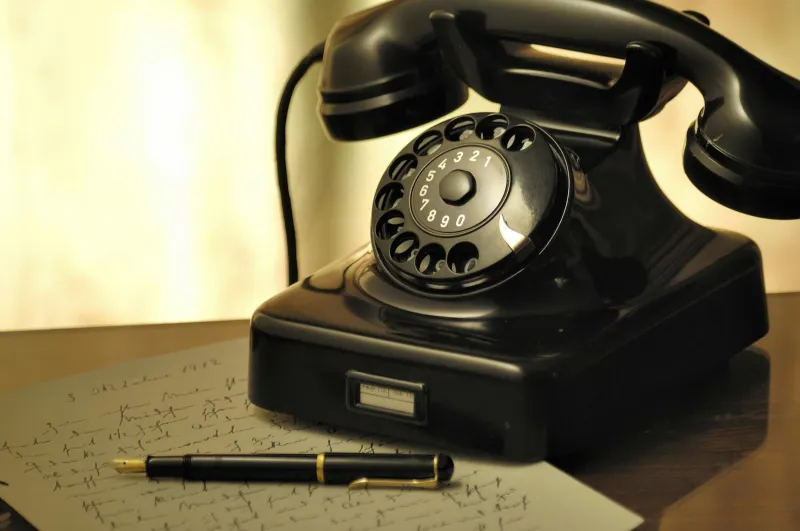
The Weight of Permanent Words
In 1952, a young soldier stationed in Korea would sit in his barracks every Sunday evening, fountain pen in hand, carefully composing a letter to his sweetheart back in Ohio. He'd draft it first on scrap paper, crossing out words, rearranging sentences, and reading it aloud to himself before committing ink to the good stationery his mother had packed in his duffel bag.
That letter would take three weeks to reach her. There was no "unsend" button, no way to add a quick clarification or emoji to soften a harsh phrase. Every word mattered because every word was final.
Today, that same message of love and longing gets reduced to "miss u babe 💕" sent at 11:47 PM and forgotten by morning.
When the Post Office Ruled America
In 1900, Americans sent and received an average of 92 pieces of mail per person each year. The postal service delivered mail twice daily in most cities—once in the morning, once in the afternoon. People planned their days around mail delivery, rushing to check for letters the way we now reflexively reach for our phones.
Letter writing wasn't just communication; it was an art form taught in schools alongside penmanship and grammar. Children learned the proper way to address an envelope, how to fold a letter correctly, and the social etiquette of correspondence. "Always respond to a letter within a week" was as fundamental a rule as "look both ways before crossing the street."
The average American family owned multiple sets of stationery—formal letterhead for business correspondence, personal note cards for social occasions, and simple writing paper for everyday use. Department stores dedicated entire sections to writing supplies: fountain pens, ink wells, blotting paper, letter openers, and desk sets that were passed down through generations.
The Ritual of Receiving
Getting mail was an event. The sound of the mail slot closing or the mailbox flag going up sent family members hurrying to see what had arrived. Letters were opened with ceremony—often with actual letter openers—and read aloud to the family if they contained news worth sharing.
People saved letters. Shoeboxes full of correspondence were treasures, creating physical archives of relationships, family history, and personal growth. Love letters tied with ribbon, condolence notes that provided comfort during difficult times, and congratulatory messages celebrating life's milestones—all preserved as tangible proof that someone cared enough to put pen to paper.
The Speed Revolution Changes Everything
The shift began gradually. Typewriters made letters faster to produce but less personal. Long-distance calling became affordable, reducing the need for letters to share urgent news. Fax machines handled business correspondence. But the real death blow came with email in the 1990s, followed by text messaging and instant messaging platforms.
Sudenly, waiting three weeks for a response seemed absurd. Why write a two-page letter when you could dash off a quick email? Why compose thoughtful paragraphs when bullet points would suffice?
By 2020, the average American received just 16 pieces of personal mail per year—mostly birthday cards and wedding invitations. The U.S. Postal Service, once the backbone of American communication, now survives primarily on package deliveries from online shopping.
What We Gained (And What We Lost)
The benefits of instant communication are undeniable. We can now maintain relationships across vast distances, coordinate complex schedules in real-time, and share immediate updates about our lives. A grandmother can see photos of her grandchildren minutes after they're taken, rather than waiting weeks for prints to arrive in the mail.
But something profound was lost in translation. The deliberate nature of letter writing forced people to organize their thoughts, to reflect on their experiences, and to express themselves with precision and care. When you only had one chance to get your message right, you made it count.
Modern digital communication encourages the opposite: rapid-fire exchanges, stream-of-consciousness rambling, and messages sent without much thought. The "send" button has replaced reflection, and "delete" has replaced permanence.
The Emotional Architecture of Patience
Perhaps most significantly, letter writing required and rewarded patience. The anticipation of waiting for a response created emotional investment in the correspondence. People treasured letters precisely because they represented time, effort, and intention—resources that couldn't be replicated with the click of a button.
Today's instant gratification culture has eroded our tolerance for delay, but it's also diminished the emotional weight of our words. When messages are free, instant, and easily deleted, they carry less meaning. The effort invested in communication has plummeted, and with it, the value we place on the words we exchange.
The Last Letter Writers
A small but dedicated community of Americans still maintains the art of letter writing. They use fountain pens, buy quality stationery, and take pride in their penmanship. They understand that in our hyperconnected world, receiving a handwritten letter has become the ultimate luxury—proof that someone cared enough to slow down, think carefully, and create something permanent.
These modern letter writers often report that their correspondences are deeper, more meaningful, and more memorable than their digital communications. They've discovered what their grandparents knew instinctively: when words are precious, we choose them more carefully.
The shift from letters to instant messages represents more than just technological progress—it's a fundamental change in how Americans communicate, connect, and express themselves. We've gained speed and convenience, but we've lost the art of making our words last.