When Americans Had No Choice But to Wait: The Lost Skill of Standing Still
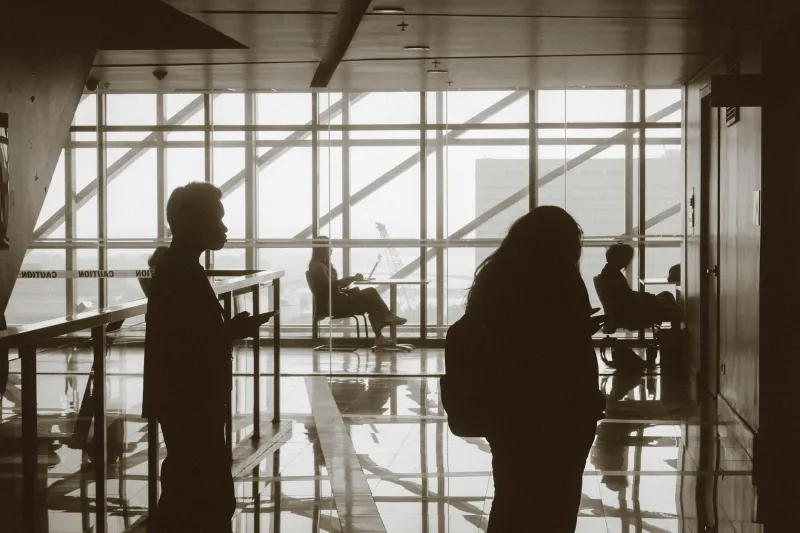
The Great American Wait
Picture this: It's 1975, and you're standing in line at the bank on Friday afternoon. The clock reads 2:47 PM, and you've been here for twenty-three minutes. The woman ahead of you is chatting with the teller about her grandson's Little League game while methodically counting out her deposit. Behind you, a businessman taps his briefcase impatiently, but there's nothing anyone can do. This is just how long things take.
For most of American history, waiting wasn't just part of life—it was the rhythm that defined daily existence. Before smartphones put the world at our fingertips and Amazon Prime made next-day delivery seem slow, Americans were professional waiters. We waited for everything: mail that took weeks to cross the country, phone calls that required operator assistance, and news that arrived once a day in the evening paper.
The Anatomy of Yesterday's Wait
Consider what a typical day looked like in 1960. You'd wake up and wait for the coffee to percolate—no instant brewing here. If you needed cash, you'd join the Friday afternoon bank rush, sometimes standing in line for thirty minutes or more. Want to make a long-distance call? You'd dial the operator and wait to be connected, often listening to busy signals for minutes at a time.
Shopping meant waiting too. At the grocery store, a clerk would gather your items from behind the counter while you stood patiently. At department stores, you'd wait for a salesperson to unlock the jewelry case or fetch your size from the stockroom. Even entertainment required patience—you'd arrive at the movie theater early to ensure good seats, then sit through previews, cartoons, and sometimes a newsreel before the main feature.
The mail system epitomized this era of enforced patience. Letters took three to five days to travel across the country, and international correspondence could take weeks. People planned their communications accordingly, writing longer, more thoughtful letters because each exchange was an investment of time.
The Social Architecture of Waiting
What's fascinating is how Americans adapted to create entire social structures around waiting. Bank lobbies became informal community centers where neighbors caught up on local news. Barbershops and beauty salons weren't just service providers—they were social hubs where people spent hours chatting while waiting their turn.
Phone calls were events, not interruptions. Families gathered around the single household telephone, and conversations were precious because long-distance rates made every minute expensive. When someone called, you stopped what you were doing and gave them your full attention.
Even traffic jams fostered different behavior. Without cell phones or satellite radio, being stuck in traffic meant actual downtime. People talked to their passengers, listened to whatever was on the radio, or simply sat with their thoughts. Road rage was less common, partly because there was less expectation of constant movement and progress.
The Patience Muscle
This constant practice of waiting developed what we might call America's "patience muscle." People became skilled at entertaining themselves during delays. They carried books, struck up conversations with strangers, or used the time for reflection. Children learned to wait without constant stimulation—a skill that required creativity and self-regulation.
Restaurants didn't apologize if your meal took forty-five minutes to arrive; that was simply how long it took to prepare food properly. Customers brought newspapers or played cards while waiting. The concept of "fast food" was revolutionary precisely because waiting for meals was so normal.
The Instant Revolution
The transformation began gradually in the 1980s and accelerated through the 1990s. ATMs eliminated bank lines. Credit cards reduced the need for cash. Answering machines meant you could leave messages instead of calling back repeatedly. Cable TV provided entertainment options beyond the three major networks.
But the real revolution came with the internet and mobile phones. Suddenly, waiting time could be filled with emails, games, social media, and endless information. What had once been empty time became productive—or at least occupied—time.
Today, a two-minute delay in loading a webpage feels interminable. We've become so accustomed to instant gratification that even minor delays trigger frustration. The average American checks their phone 96 times per day, often simply to avoid the discomfort of having nothing to do.
What We Gained and Lost
The benefits of our instant world are obvious: increased productivity, better access to information, and the ability to accomplish more in less time. We can video chat with family across the globe, order dinner with a few taps, and access virtually any piece of human knowledge within seconds.
But something subtler was lost in the transition. The forced downtime that waiting provided gave people space to think, process emotions, and develop tolerance for boredom. Many of our best ideas come during unstructured mental time—something that's increasingly rare when every spare moment can be filled with digital stimulation.
The social connections forged during shared waiting experiences have also largely disappeared. We no longer chat with strangers in line because we're all looking at our phones. The barbershop conversations and bank lobby encounters that once wove communities together have given way to isolated digital interactions.
The Patience Paradox
Perhaps most significantly, we've lost the ability to be comfortable with discomfort. The generation that grew up waiting for everything developed a different relationship with time and expectations. They understood that good things often require patience—a lesson that's harder to learn when instant gratification is always an option.
This shift has implications beyond convenience. Some psychologists argue that our decreased tolerance for waiting has contributed to increased anxiety, shorter attention spans, and difficulty with delayed gratification—skills that are crucial for long-term success and happiness.
Standing Still in a Moving World
As we rush toward an even faster future, it's worth remembering what life was like when Americans had no choice but to wait. Those long lines and delayed gratifications weren't just inconveniences—they were training grounds for patience, creativity, and human connection.
The next time you find yourself frustrated by a slow internet connection or a delayed flight, consider that your grandparents might have seen it differently. They understood something we've forgotten: that sometimes the best things in life are worth waiting for, and that the waiting itself might be more valuable than we realized.