When Albums Were Sacred: How America Went from Cherishing 12 Songs to Skipping Millions
The Ritual of Saturday Morning
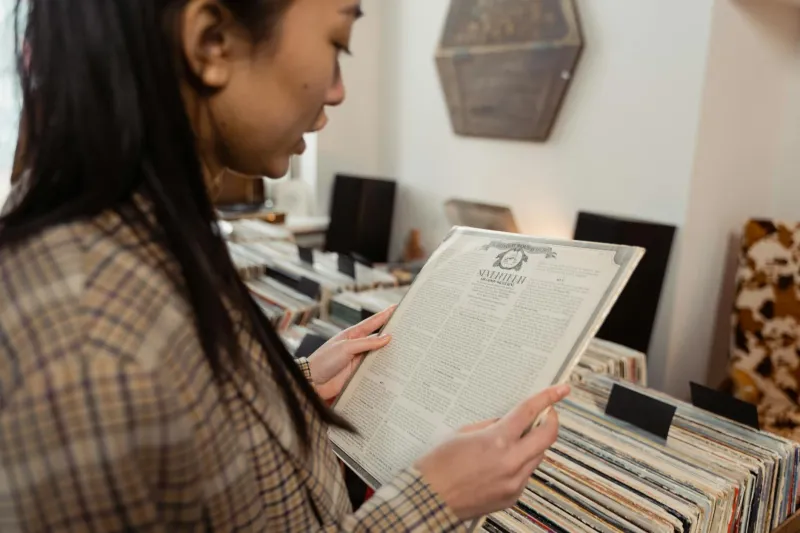
Every Saturday morning in 1975, teenagers across America performed the same ritual. They'd save allowance money for weeks, take the bus downtown to the record store, and spend an hour carefully examining album covers, reading liner notes, and debating whether to buy the new Led Zeppelin or save up for something else. A single LP cost $5.98—equivalent to about $30 today—making each purchase a significant financial decision.
Once home, they'd carefully remove the shrink wrap, admire the cover art, and place the needle on track one. For the next 45 minutes, they'd listen to the entire album as the artist intended, from opening track to final fade-out. Music wasn't background noise. It was an event.
When Music Had Weight
Physical records demanded respect. Vinyl scratched if handled carelessly. Albums warped in heat. The ritual of playing music required intention: selecting an album, cleaning the record, adjusting the needle, and committing to the full experience. You couldn't skip tracks without getting up and moving the needle—a process so cumbersome that most listeners simply let albums play through.
This physical relationship created emotional investment. Teenagers knew every scratch on their favorite albums, could identify songs by their opening grooves, and treated record collections like sacred libraries. Albums lived in bedrooms, displayed like art, representing identity and taste in ways that digital playlists never could.
The Economics of Scarcity
In the vinyl era, music existed in a economy of scarcity. Record companies invested heavily in fewer releases, marketing them extensively and pressing limited quantities. Radio stations received promotional copies, but consumers had to buy albums to own the music. There was no other option.
This scarcity created value. A popular album might sell millions of copies at full price for months. Artists and record companies could afford to take creative risks because each sale generated substantial revenue. The economic model supported experimentation, elaborate packaging, and the concept of albums as complete artistic statements rather than collections of potential singles.
The Cassette Revolution: Portability Changes Everything
The compact cassette, introduced in the 1960s but popularized in the 1970s, began shifting music from ritual to convenience. Suddenly, you could record albums onto blank tapes, create custom mixtapes, and carry music anywhere. The Sony Walkman, launched in 1979, made music truly personal and portable.
But cassettes maintained music's physical nature. You still bought albums, still owned tangible objects, still experienced music as complete works. The difference was mobility—music could now soundtrack daily life rather than demanding dedicated listening time.
The CD Era: Perfect Sound Forever?
Compact discs, introduced in 1982, promised "perfect sound forever" while maintaining the album-as-artifact model. CDs were expensive—often $15-18, or about $40-50 in today's money—but they offered durability, convenience, and superior sound quality. The music industry experienced a boom as consumers repurchased their vinyl collections on CD.
CDs also introduced the first hint of music's digital future. Unlike vinyl, which degraded with each play, CDs delivered identical sound every time. But they still required purchase, still represented significant investment, and still presented music as curated albums rather than individual tracks.
The MP3 Earthquake
Then came MP3s and file sharing, which didn't just change music distribution—they obliterated the entire economic model overnight. Suddenly, any song ever recorded could be downloaded free from services like Napster. The physical relationship with music evaporated as songs became computer files, weightless and infinitely copyable.
Record sales collapsed. Between 1999 and 2009, CD sales fell from $13.2 billion to $2.9 billion. But something more profound happened: music lost its scarcity, and with scarcity gone, its perceived value plummeted. Why pay $18 for a CD when you could download the same songs for free?
The iTunes Compromise
Apple's iTunes Store, launched in 2003, attempted to restore some value to digital music by making legal downloads convenient and affordable. At 99 cents per song or $9.99 per album, iTunes pricing acknowledged music's reduced value while providing a legal alternative to piracy.
But iTunes also accelerated the death of the album. For the first time in music history, consumers could buy individual tracks without purchasing complete albums. Artists began focusing on hit singles rather than cohesive album experiences. The carefully crafted artistic statements that defined the vinyl era gave way to collections of potential iTunes singles.
The Streaming Revolution: Music Becomes Utilities
Spotify, launched in the US in 2011, completed music's transformation from product to service. For $9.99 monthly—less than the cost of a single 1990s CD—subscribers gained access to virtually every song ever recorded. Music became like electricity or water: always available, rarely considered, and valued only when absent.
Streaming metrics reveal how this abundance changed listening behavior. The average song is now skipped within 30 seconds. Users create playlists mixing songs from different eras and genres, divorcing tracks from their original album contexts. The concept of "deep cuts"—album tracks that weren't singles—has largely disappeared as algorithms promote only the most popular songs.
The Attention Economy Meets Music
In today's streaming world, songs compete not just with other songs but with podcasts, videos, social media, and every other form of digital entertainment. Music has become background noise for other activities rather than the main event. The average American now has access to over 100 million songs but listens to fewer unique tracks than music fans did in the vinyl era.
Artists respond to this attention economy by frontloading songs with hooks, keeping tracks under three minutes, and releasing music constantly to stay visible in streaming algorithms. The album—once a sacred artistic statement—has become a marketing concept, with many "albums" functioning as loosely connected collections of singles.
What We Lost in the Translation
The democratization of music access represents genuine progress. Today's music fans can explore genres, eras, and artists that would have been impossible to discover in the vinyl era. But something irreplaceable was lost in the transition from scarcity to abundance.
When music required financial investment and physical interaction, it demanded attention. Albums were experienced as complete artistic works. Music fans developed deep relationships with smaller numbers of artists and songs. The ritual of music listening created space for reflection, emotion, and genuine engagement.
The Paradox of Infinite Choice
Today's music landscape offers unprecedented choice but often paralyzes listeners with options. Spotify's "analysis paralysis" is real—faced with millions of songs, many users default to algorithmic playlists or familiar hits. We have access to more music than any generation in history but often struggle to find anything we want to hear.
Meanwhile, artists earn fractions of pennies per stream, requiring millions of plays to generate the revenue that a few thousand album sales once provided. The economic model that supported musical experimentation and artistic development has largely collapsed, replaced by a system that rewards only the most immediately engaging content.
The Sacred and the Disposable
The transformation of music from sacred object to disposable utility reflects broader changes in how Americans relate to art, ownership, and attention. We gained convenience, variety, and accessibility. We lost ritual, investment, and the deep satisfaction that comes from truly knowing a piece of music.
Every generation mourns what it has lost, but the shift from vinyl to streaming represents something more than nostalgic preference. It reflects a fundamental change in how we value creative work, engage with art, and structure our relationship with culture itself. In gaining the ability to access any song instantly, we may have lost the ability to truly listen to any of them.