The Vanishing Village: How American Neighborhoods Became Islands of Strangers
When Everyone Knew Everyone
Picture this: It's 1955 in suburban Minneapolis. Betty Johnson steps onto her front porch at 7 AM, coffee in hand, and waves to three neighbors already visible in their yards. She knows that Mrs. Peterson's arthritis is acting up again, that the Millers' youngest just lost his first tooth, and that Tom from two houses down got promoted at the insurance company. By evening, she'll have borrowed eggs from one neighbor, shared gossip with another, and helped coordinate a block party that will happen without a single group text or Facebook event.
This wasn't unusual. This was America.
The Numbers Tell the Story
The statistics are staggering. In 1950, surveys showed the average American could name 25 neighbors. Today, that number hovers around 8. More shocking: 28% of Americans report they don't know any of their neighbors' names at all.
But the shift goes deeper than names. In the 1950s, 72% of Americans regularly borrowed items from neighbors. Today, it's 31%. Back then, 65% of children played regularly with neighborhood kids without parental supervision. Now, it's less than 15%.
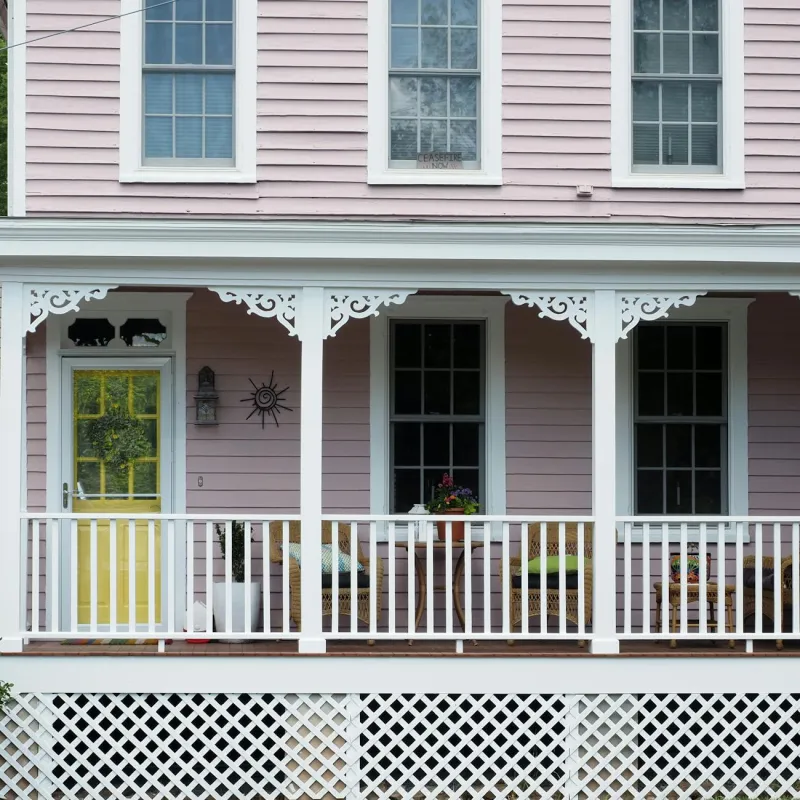
The front porch culture that defined American neighborhoods for a century disappeared almost overnight. In 1940, 89% of new homes included front porches. By 1990, that figure had plummeted to 42%. Today, it's barely 25%.
The Great Garage Door Revolution
Nothing symbolizes the transformation quite like the garage door opener. Introduced widely in the 1960s, this simple device fundamentally altered how Americans interacted with their neighborhoods. Before remote-controlled garage doors, coming home meant parking on the street or in a detached garage, then walking to your front door—often stopping to chat with whoever happened to be outside.
The automatic garage door created what sociologists call "the cocoon effect." Suddenly, Americans could drive directly into their homes without ever setting foot in their neighborhood. The ritual of the evening stroll to check on neighbors became extinct almost overnight.
Suburban Design Killed the Community
The post-war suburban boom promised the American Dream, but it delivered something unexpected: isolation by design. Unlike the grid-pattern neighborhoods of earlier eras, new subdivisions featured winding streets that discouraged walking and cul-de-sacs that created natural barriers between sections of the community.
Front yards grew larger, pushing houses further apart. Backyard patios replaced front porches, turning social spaces private. Air conditioning eliminated the need to sit outside on hot summer evenings—precisely when most neighborly conversations used to happen.
The numbers are telling: In 1950, the average lot size was 0.22 acres. By 2000, it had grown to 0.38 acres. Houses got bigger too—from an average of 983 square feet in 1950 to 2,169 square feet by 2000. More space inside meant less reason to venture out.
The Social Media Paradox
Ironically, as Americans became more connected globally through social media, they became more disconnected locally. Why knock on a neighbor's door when you can scroll through hundreds of "friends" online? The effort required for face-to-face interaction began to feel inefficient compared to digital alternatives.
Nextdoor, the neighborhood-focused social app launched in 2010, was supposed to recreate digital village squares. Instead, it often became a platform for complaints about barking dogs and suspicious-looking strangers—highlighting how far neighborhood relationships had deteriorated.
What We Lost in Translation
The consequences extend far beyond knowing fewer names. The tight-knit neighborhoods of mid-century America provided what sociologists call "social capital"—the network of relationships that made daily life easier and safer.
In 1950, if your car broke down, you knew exactly which neighbor to call. If you needed someone to watch your kids for an hour, three options lived within shouting distance. If a stranger lurked around the neighborhood, word spread through an informal but highly effective communication network.
Today, Americans are more likely to hire services for tasks neighbors once handled for free. We pay for babysitters instead of trading childcare favors. We order groceries online rather than borrowing a cup of sugar. We install security cameras instead of relying on neighborly vigilance.
The Loneliness Epidemic
The health implications are measurable and alarming. The U.S. Surgeon General declared loneliness a public health epidemic in 2023, noting that chronic loneliness carries health risks equivalent to smoking 15 cigarettes daily.
Research consistently shows that Americans with strong neighborhood connections live longer, experience less depression, and recover faster from illnesses. Yet we've systematically dismantled the social structures that created these connections.
Signs of a Possible Revival
Interestingly, younger Americans are beginning to push back against neighborhood isolation. Millennials and Gen Z are more likely than previous generations to organize block parties, create neighborhood WhatsApp groups, and participate in community gardens.
Some cities are redesigning suburbs to encourage interaction—adding sidewalks, shrinking lot sizes, and requiring front porches on new construction. The "New Urbanism" movement explicitly aims to recreate the walkable, community-oriented neighborhoods that Americans abandoned in the suburban rush.
The Village We Left Behind
The transformation from village-like neighborhoods to anonymous subdivisions represents more than changing architecture or transportation patterns. It reflects a fundamental shift in how Americans balance privacy with community, convenience with connection.
Whether this represents progress or loss depends on your perspective. But one thing is undeniable: the America where everyone knew their neighbors' business—for better and worse—has largely vanished, replaced by a culture where not knowing your neighbors' names has become the norm rather than the exception.
The question isn't whether we can return to 1955. It's whether we can find new ways to build the connections that made those neighborhoods feel less like subdivisions and more like home.