Main Street Used to Be the Algorithm: The Slow Death of America's Original Social Network
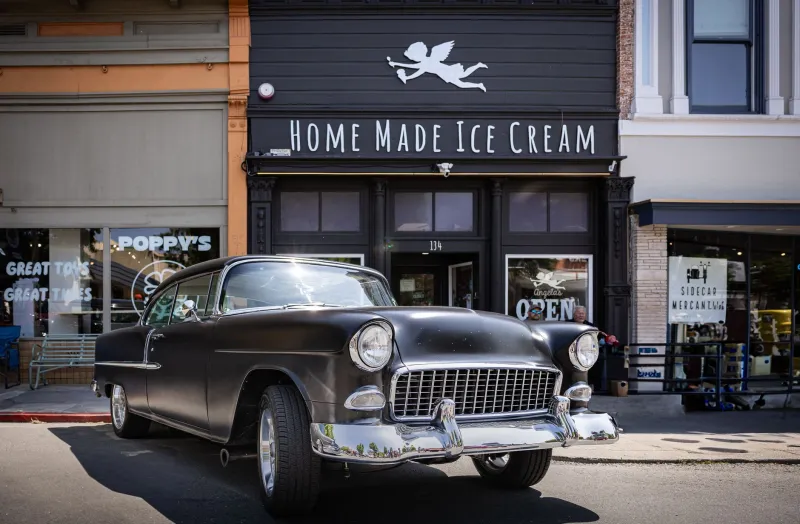
Main Street Used to Be the Algorithm: The Slow Death of America's Original Social Network
Imagine a place where you could run into your doctor, your banker, your neighbor's kid, and the man who owed your father money — all within the same twenty-minute errand. A place where news about a local fire, an upcoming election, or a new business opening spread not through a notification but through actual conversation between actual people standing on actual pavement. That place existed. Most American towns had one. And its disappearance is one of the quietest, most consequential shifts in how this country actually functions.
The town square — or its close cousin, the central main street — was America's original public infrastructure. Not roads, not utilities. The gathering place. And we've spent the last seventy years replacing it with things that look like improvements but don't quite do the same job.
The Square as Operating System
In the 18th and 19th centuries, American town centers weren't just convenient shopping districts. They were the mechanism through which civic life actually ran. The courthouse, the church, the post office, the general store, the tavern — these weren't scattered across a metro area connected by a freeway. They were clustered together, often literally around a central square, because proximity was the whole point.
You went to the square to conduct business, yes. But you also went to hear announcements, argue politics, find out who had died and who had been born, and simply be visible in your community. Showing up mattered. Being seen mattered. The social contract of small-town America was written and renewed in those daily encounters — the nod across the street, the handshake outside the hardware store, the conversation that started about corn prices and ended up covering three generations of family history.
Real estate on and around the town square commanded a premium for exactly this reason. The closer your shop or office was to the center of civic gravity, the more traffic you saw — not just foot traffic, but the kind of human traffic that built reputations and relationships. Location wasn't just about convenience. It was about belonging.
The Mall Arrives and Rewrites the Rules
The shopping mall didn't kill the town square all at once. It lured people away gradually, one air-conditioned Saturday afternoon at a time.
Starting in the 1950s and accelerating through the 1960s and 70s, enclosed malls began appearing on the outskirts of American cities and towns, and they offered something genuinely appealing: weather protection, parking, variety, and newness. Main street storefronts, often cramped and aging, couldn't match the visual spectacle of a freshly built mall with a food court and a dozen anchor stores.
Families shifted their shopping habits. Then the stores followed. Then the tax base followed the stores. And town centers that had anchored communities for generations began to hollow out — first slowly, then all at once. The barbershop closed. The hardware store couldn't compete. The diner held on a little longer than most.
What the mall gave Americans was selection and convenience. What it quietly took was spontaneity. You didn't stumble into a mall. You drove to it with a purpose. The accidental encounters — the chance meeting with your old teacher, the overheard conversation that changed your mind about something — became rarer. The mall was designed for consumption, not community. You could spend four hours there and not speak to a single person you knew.
Big Box, Then No Box
Just as Americans had fully adjusted to mall culture, the next wave hit. Big-box retail — Walmart, Target, Home Depot — took the mall's logic and stripped it of even its remaining social pretense. These were not gathering places. They were efficient warehouses for purchasing things, located on highway corridors, surrounded by parking lots the size of small airports.
Main streets that had survived the mall era often didn't survive this one. The local hardware store that had somehow held on against the mall couldn't hold on against a big-box home improvement chain with 40,000 square feet and prices that didn't leave room for argument.
And then, before anyone had fully processed what had already happened, the internet arrived — and eventually e-commerce made even the drive to the big-box store feel optional. Today, Americans can meet every material need without leaving home, without speaking to a neighbor, without standing on a sidewalk in their own town.
What the Square Actually Did That Nothing Else Does
Here's the part that tends to get lost in nostalgia: the town square wasn't just a nice idea. It performed a specific civic function that no digital platform has successfully replicated. It created what sociologists call "weak ties" — casual, low-stakes connections with people outside your immediate circle. Research consistently shows that these weak ties are actually more valuable than strong ones for spreading information, creating opportunity, and building social trust.
When you ran into your neighbor's boss on the courthouse steps, or overheard a conversation at the general store that led to a job opportunity, or watched two people you knew disagree publicly and then shake hands — that was social infrastructure working. It built the kind of community resilience that doesn't show up in any metric until it's gone.
Some towns are trying to rebuild it. Farmers markets, outdoor dining expansions, pedestrian-only streets, and mixed-use downtown developments are all attempts to recreate the conditions that once existed naturally. Some of these efforts are genuinely working. Walkable, mixed-use neighborhoods now command some of the highest real estate premiums in the country — which is itself an interesting signal. People will pay more to live somewhere that feels like a place.
Maybe the town square isn't gone. Maybe it's just very expensive now.