The Three-Week Wait vs. the Instant Alert: How Medical Diagnosis Flipped from Patience to Panic
When Waiting Was the Only Option
Picture this: It's 1978, and you're sitting in Dr. Peterson's wood-paneled office, watching him scribble notes in your thick manila folder. You've been feeling tired lately, maybe a little dizzy. He orders some blood work—"just to be safe"—and tells you someone will call with the results.
Then you wait. And wait.
Three weeks pass. No phone call. In the pre-internet era, this silence could mean anything. Good news? Bad news? Did the lab lose your samples? You have no way of knowing. The only option is to call the office, where a receptionist might—if you're lucky—tell you "no news is good news" or schedule you for a follow-up appointment two weeks out.
This was healthcare for most of American history: a slow, deliberate process built on patience, trust, and the understanding that your body's mysteries would reveal themselves in their own time.
The Digital Revolution Arrives at Your Wrist
Fast-forward to today, and your smartwatch just buzzed with an irregular heartbeat notification while you're standing in line at Starbucks. You haven't felt anything unusual, but the device's sensors detected something your own body awareness missed. Within seconds, you're googling "atrial fibrillation" and spiraling down a WebMD rabbit hole that has you convinced you're having a medical emergency.
Welcome to the era of instant medical awareness, where consumer devices can spot health issues faster than traditional medical appointments can be scheduled.
Modern wearables monitor heart rate variability, blood oxygen levels, sleep patterns, and even detect falls. Some can perform basic EKGs. The Apple Watch has famously alerted users to previously undiagnosed heart conditions, potentially saving lives by catching problems that might have gone unnoticed for months or years under the old system.
The Speed of Information vs. The Wisdom of Time
The transformation isn't just about speed—it's about who controls medical information. In the 1970s, your doctor was the gatekeeper of your health data. Test results went to them first, and they decided when and how to share information with you. This paternalistic approach had obvious downsides, but it also provided a buffer against medical anxiety.
Today, many Americans can access their lab results online before their doctor has even reviewed them. Blood tests that once took weeks now return in 24-48 hours, complete with reference ranges and red flags for abnormal values. Your fitness tracker generates daily reports on metrics that previous generations never thought to measure.
But here's the catch: having more information doesn't necessarily mean better health outcomes. The instant availability of health data has created what researchers call "cyberchondria"—a modern form of hypochondria fueled by immediate access to medical information and the ability to self-monitor constantly.
When Every Heartbeat Becomes Data
Consider the psychological difference between these two scenarios:
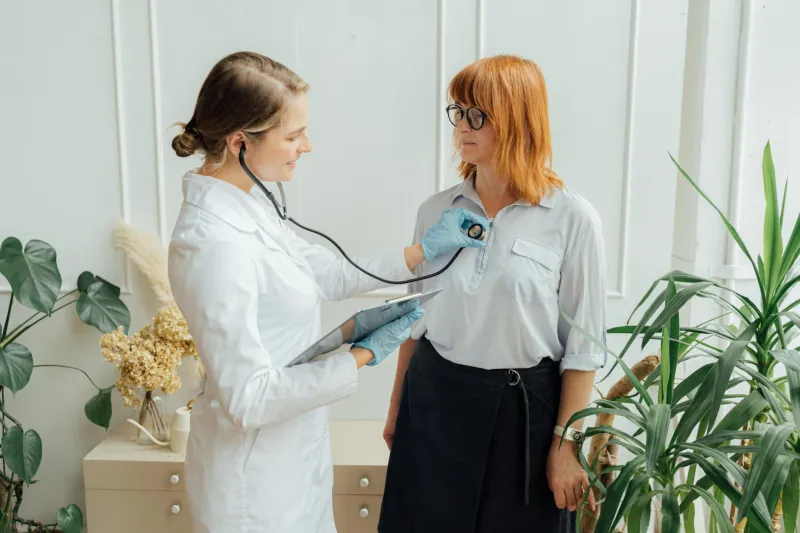
1978: You feel your heart skip a beat occasionally. You mention it to your doctor during your annual physical. He listens with a stethoscope, asks a few questions, and says it's probably nothing to worry about unless it gets worse.
2024: Your smartwatch tracks every heartbeat, 24/7. It alerts you to irregular rhythms you never would have noticed. You receive weekly reports showing your resting heart rate trends, sleep quality scores, and cardiovascular fitness levels compared to others your age.
The modern approach catches real problems earlier, but it also turns every bodily function into a source of potential anxiety. We've gained early detection but lost the blissful ignorance that allowed previous generations to live without constantly monitoring their vital signs.
The Democratization of Medical Knowledge
Perhaps the most dramatic shift is how medical knowledge has spread beyond the doctor's office. In 1975, if you wanted to understand your symptoms, you might consult a heavy medical encyclopedia at the library—if you could interpret the technical language.
Today, symptom checkers, health apps, and online communities provide instant access to medical information. Patients arrive at appointments with printouts from medical websites, self-diagnosed conditions, and specific treatment requests. The doctor-patient relationship has evolved from "trust me, I'm the expert" to "let's discuss what Google told you."
This democratization has empowered patients to take charge of their health, but it's also created information overload. The average American now receives more health-related information in a single day than their great-grandparents encountered in a lifetime.
The Anxiety of Knowing Too Much
The irony of our medical progress is that we're simultaneously healthier and more worried about our health than ever before. Life expectancy has increased dramatically since the 1970s, yet Americans report higher levels of health anxiety.
We've traded the frustration of waiting weeks for test results for the stress of receiving instant alerts about every bodily irregularity. We've gained the ability to detect problems early but lost the peace of mind that came with not constantly monitoring our biological functions.
Finding Balance in the Information Age
The challenge moving forward isn't choosing between old and new approaches—it's finding the right balance between beneficial early detection and counterproductive health anxiety. The technology that can save lives by catching heart problems early is the same technology that can create unnecessary stress over normal biological variations.
As we continue to develop more sophisticated health monitoring tools, perhaps the next evolution in healthcare will be learning not just how to gather health data, but how to interpret it wisely—combining the speed of modern diagnostics with the measured perspective that previous generations were forced to develop.
After all, your smartwatch might beat your doctor to the diagnosis, but it still can't provide the human wisdom to know when that diagnosis actually matters.