Sweat Was Just Living: How Americans Got Fit Without Thinking About It
In 1955, Jack Morrison of Cleveland, Ohio, had never heard the word "cardio." He didn't own running shoes, had never seen a treadmill, and would have been baffled by the concept of "working out." Yet at 45, Jack could probably outperform most of today's gym members in any measure of functional fitness.
Jack wasn't an athlete. He was an ordinary American living an ordinary life — which, by mid-century standards, meant burning thousands of calories without ever thinking about exercise.
The Accidental Athletes
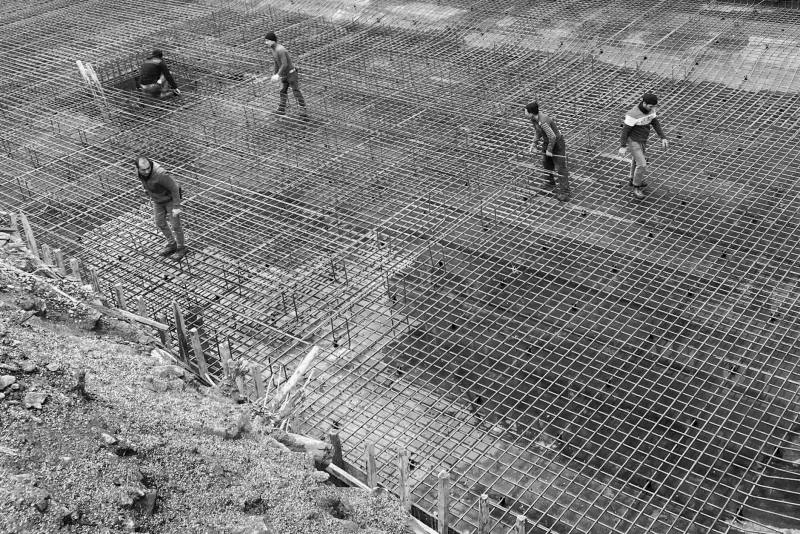
Jack's day began at 6 AM with a half-mile walk to the streetcar stop. No driving to work — the family's single car stayed home with his wife, who would walk six blocks to the grocery store later that morning, carrying bags of food back by hand. At the steel plant, Jack spent eight hours lifting, hauling, and operating machinery that required physical strength. He climbed stairs instead of riding elevators, simply because most buildings didn't have them.
After work, Jack walked home, then spent his evening doing what Americans once called "chores" — chopping wood for the furnace, raking leaves, shoveling snow, painting the house, fixing the fence. Weekend projects meant building a backyard shed or helping a neighbor move furniture. Entertainment often involved dancing, bowling, or walking through downtown to window shop.
By modern standards, Jack was getting two to three hours of moderate to intense physical activity every single day. He was also burning an estimated 3,500 to 4,000 calories daily — nearly twice what the average American burns today.
The remarkable thing? Jack never thought of any of this as "fitness." It was just life.
When Movement Was Mandatory
Mid-20th century America was built for bodies in motion. The average worker burned 700-800 calories during their workday, compared to fewer than 300 for today's typical office employee. Manufacturing jobs required lifting, carrying, and standing. Even white-collar workers climbed stairs, walked between offices, and operated manual equipment.
Housework alone provided a full-body workout. Washing clothes meant hauling water, scrubbing by hand, and hanging heavy wet fabrics on lines. Cooking involved chopping, kneading, stirring, and lifting cast-iron pots. Cleaning meant sweeping, mopping, beating rugs, and washing windows. A typical housewife burned 1,000-1,500 calories daily on domestic tasks that are now largely automated.
Transportation demanded leg power. In 1950, Americans walked an average of 1.5 miles per day just getting places. Public transit required walking to stops, climbing stairs, and standing during rides. Even car owners walked more — parking was limited, so people often parked several blocks from their destinations.
Recreation was active by default. Families went on picnics that involved hiking to scenic spots. Kids played elaborate games of tag, hide-and-seek, and pickup sports that kept them moving for hours. Adults socialized through activities like dancing, gardening clubs, and community sports leagues.
The Engineering of Inactivity
The transformation began gradually, then accelerated dramatically. Between 1950 and 2000, American life was systematically redesigned to eliminate physical effort.
Suburban development spread homes, jobs, and services across distances that required driving. The average American now lives 5.5 miles from work, compared to 1.8 miles in 1950. Zoning laws separated residential areas from commercial districts, making walking to stores or restaurants impossible for most people.
Workplace automation eliminated physical labor across industries. Assembly line jobs gave way to computer terminals. Construction workers began using power tools instead of manual equipment. Even traditionally active jobs like farming became mechanized — a modern farmer burns 40% fewer calories than his 1950s counterpart.
Home technology eliminated domestic physical activity. Washing machines, dishwashers, vacuum cleaners, and garbage disposals reduced housework from hours of physical labor to minutes of button-pushing. Microwaves replaced stove cooking. Riding mowers eliminated the weekly workout of push-mowing lawns.
Entertainment became sedentary. Television replaced active recreation for many families. Video games kept kids indoors. Shopping moved from downtown walking districts to suburban malls and eventually to online delivery. The average American now spends 7-8 hours daily sitting, compared to 3-4 hours in 1950.
The Fitness Industry Is Born
As activity disappeared from daily life, Americans began noticing the consequences. Weight gain became common. Cardiovascular fitness declined. Back problems multiplied among office workers. Heart disease rates climbed.
The solution was to create an industry around the movement that life no longer provided naturally. The first modern fitness club opened in 1965. By 1970, jogging had become a cultural phenomenon. Aerobics classes exploded in the 1980s. Today, Americans spend $35 billion annually on gym memberships, personal trainers, fitness equipment, and workout programs.
The irony is striking: we pay monthly fees to walk on treadmills that simulate the walking our grandparents did for free. We lift weights to replicate the strength training that manual labor once provided. We take yoga classes to achieve the flexibility that varied physical activities naturally maintained.
Modern fitness culture has created elaborate systems to replace simple movements. Instead of walking to work, we drive to gyms to walk on machines. Instead of lifting and carrying as part of daily tasks, we perform isolated exercises that target specific muscle groups. Instead of getting physical activity throughout the day, we compress it into concentrated "workout" sessions.
The Metabolic Shift
The numbers tell a stark story. In 1950, the average American man burned 2,900 calories daily and consumed about 2,800 — a slight caloric deficit that kept weight stable. Today's average man burns 2,400 calories while consuming 2,500 — a surplus that leads to gradual weight gain over time.
The difference isn't primarily about food intake, though portion sizes have grown. It's about the systematic removal of physical activity from ordinary life. We've engineered movement out of existence, then wondered why staying fit requires such effort.
Consider the typical modern American's day: wake up, drive to work, sit at a desk for eight hours, drive home, sit on the couch for several hours, then go to bed. Total steps: often fewer than 3,000. Total calories burned through movement: perhaps 200-300.
Compare that to Jack Morrison's routine in 1955: walk to transit, stand and move during work, walk home, spend evening on physical tasks, then sleep. Total steps: 8,000-12,000. Calories burned through movement: 1,500-2,000.
What We Lost and Gained
The shift from naturally active to artificially sedentary lives brought obvious benefits. Modern Americans work in safer, more comfortable environments. We have more leisure time and entertainment options. Technology has eliminated much of the physical drudgery that defined earlier eras.
But we've also lost something fundamental about human physicality. Our ancestors developed fitness as a byproduct of useful work — building things, growing food, maintaining homes, caring for families. Modern fitness often feels disconnected from practical purpose, which may explain why so many people struggle to maintain exercise routines.
The old system also integrated physical activity throughout the day, providing regular movement breaks that benefited both body and mind. Today's compressed workout model — sitting for 23 hours, then exercising intensely for one — doesn't replicate the steady, varied activity patterns that human bodies evolved to handle.
Lessons from the Past
The story of how Americans went from naturally active to artificially sedentary offers insights for anyone struggling with modern fitness culture. Our bodies were designed for regular, varied movement integrated into meaningful activities. The gym industry has tried to replicate this through artificial means, but the original model might offer better solutions.
Some people are rediscovering "functional fitness" — exercises that mimic real-world movements and activities. Others are finding ways to build more movement into daily routines: walking or biking for transportation, taking stairs instead of elevators, doing household tasks manually instead of relying on machines.
The broader lesson may be that fitness isn't something you do — it's something you live. Our grandparents stayed fit not because they had more willpower or better genetics, but because their world demanded physical activity just to function.
As we continue designing increasingly automated lives, the story of America's accidental athletes reminds us that human bodies need movement to thrive. The question isn't whether we should return to 1950s lifestyles, but how we might rebuild some of that natural activity into modern life without sacrificing the conveniences we value.
The fitness industry will always have a place in American life. But the most sustainable approach to physical health might be learning from an era when sweating was just part of living, and fitness was something you earned through useful work rather than something you purchased at a monthly rate.