Strangers in Plastic Chairs: The Forgotten Social Life of the Doctor's Waiting Room
Picture a Tuesday morning in 1974. You've got a 10 o'clock appointment with Dr. Harmon — your family's doctor for the past twelve years — but everyone in town also has a 10 o'clock appointment with Dr. Harmon. You know this because you're sitting in a room with fourteen of them right now.
The chairs are vinyl, slightly sticky in summer. A child across the room is quietly destroying a wooden puzzle. An older man in a cardigan has already told you more about his knee than you expected. Someone's reading a Reader's Digest from three months ago, and nobody finds that strange. This is the waiting room. And waiting — genuinely, openly, without distraction — is exactly what you're here to do.
For most of the 20th century, the doctor's waiting room was one of the last truly democratic public spaces in American life. Rich or working class, young or old, you sat in the same chairs, breathed the same slightly antiseptic air, and waited your turn. Nobody was more important than anyone else. The appointment time on your card was more of a suggestion than a guarantee.
The Room Where Time Moved Differently
There's a reason people remember waiting rooms so vividly. They were unusual spaces in American daily life — places where you had no choice but to slow down and be present. You couldn't leave. You couldn't fast-forward. You just sat there, and the world went on without you for a little while.
For many Americans, especially in smaller towns, the waiting room was a genuine social hub. You ran into neighbors. You caught up on local gossip. Elderly patients who lived alone might have had more human contact in Dr. Peterson's waiting room on a Wednesday morning than at any other point in their week. The receptionist knew your name, your mother's name, and probably the story behind your last visit.
Magazine publishers understood this captive audience well. Time, Life, Good Housekeeping, and National Geographic were waiting room staples — read, re-read, and occasionally stolen. The magazines were always a little out of date, which somehow made them feel even more appropriate for a room where time didn't quite function normally.
Children's corners with worn wooden toys. Fish tanks nobody could explain. Framed prints of pastoral landscapes that seemed designed to calm anyone who looked at them long enough. The waiting room had its own visual language, and every American knew how to read it.
The Clock Started Moving Faster
The shift began gradually in the 1990s as managed care and insurance-driven medicine started pressuring doctors to see more patients in less time. The waiting room didn't disappear overnight — but the culture around it started to change. The goal became throughput. Efficiency. Patient volume.
By the 2010s, large healthcare networks were investing in digital scheduling systems, automated check-in kiosks, and — most significantly — patient portal apps that could send your phone a notification when the doctor was actually ready for you. The idea was simple: why make someone sit in a room when they could wait in their car, or grab a coffee next door, and only come in when needed?
On paper, this was a genuine improvement. Waiting times dropped. Patient satisfaction scores on efficiency metrics climbed. Nobody missed the sticky vinyl chairs in any measurable way.
What the Data Doesn't Measure
But here's what the efficiency metrics couldn't capture: the waiting room was doing something that nobody had officially assigned it to do. It was creating moments of accidental human connection in a society that was becoming steadily more isolated.
The older gentleman who told you too much about his knee? He was lonely. The mother with three kids who struck up a conversation about the local school? She was exhausted and needed five minutes of adult interaction. The receptionist who greeted you by name wasn't just being professional — she was performing a small but meaningful act of community recognition.
Studies on loneliness in America paint a stark picture. Before the pandemic, researchers at Cigna found that over 60 percent of American adults reported feeling lonely sometimes or always. After the pandemic accelerated the digitization of everything — including healthcare — those numbers got worse. The spaces where Americans used to accidentally encounter each other have been systematically optimized out of existence, one kiosk at a time.
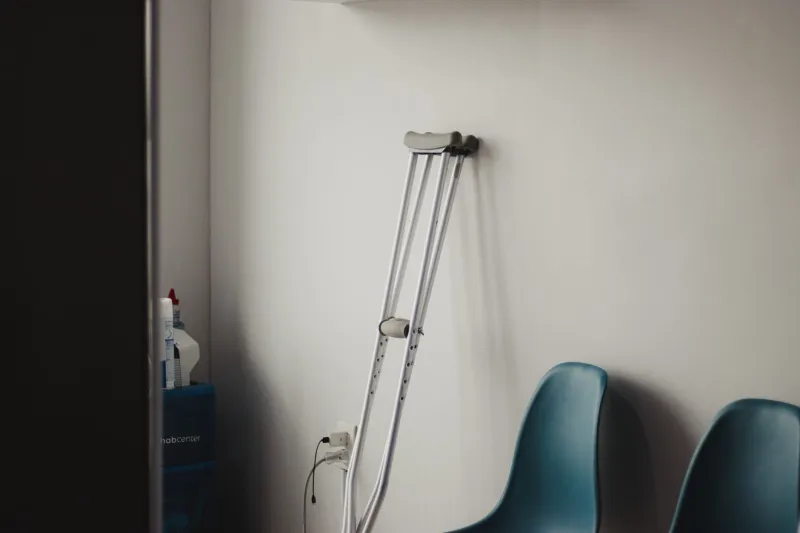
Today's waiting room — where one still exists — looks different. Fewer chairs, more spread out. Everyone staring at a phone. No magazines, because someone decided they were a germ vector. The fish tank is gone. The receptionist might be a screen.
The Trade-Off We Made Without Voting On It
It's worth being honest about this: the old system was genuinely inefficient. Waiting ninety minutes past your appointment time to see a doctor for seven minutes was not a good use of anyone's Tuesday. The anxiety of not knowing when you'd be called, the childcare logistics, the lost wages for hourly workers — these were real costs that real people paid.
The new system is better in measurable ways. Telehealth has made healthcare accessible for people in rural areas who used to drive an hour each way. Digital records mean your new specialist actually knows your medical history. The app notification that tells you to come in now instead of waiting is, objectively, a convenience.
But there's a version of progress that removes friction without considering what the friction was holding together. The waiting room was friction. It was also, quietly, community.
A Room That Reflected Who We Were
What the waiting room really represented was a version of American life that assumed you would sometimes have to share space with strangers and be patient about it. It assumed that time wasn't always yours to optimize. It assumed that the person next to you might say something worth hearing.
We've built a healthcare system — and honestly, a society — that no longer makes those assumptions. The waiting is gone. So is some of what made the waiting bearable, and occasionally, meaningful.
Next time you get that text saying the doctor is ready, take a second before you walk in. Somewhere in the efficiency, a small and unremarkable social ritual quietly disappeared. And most of us were too busy looking at our phones to notice.