The Neighborhood Was the Playground: What Happened to the American Kid Who Roamed Free
The Neighborhood Was the Playground: What Happened to the American Kid Who Roamed Free
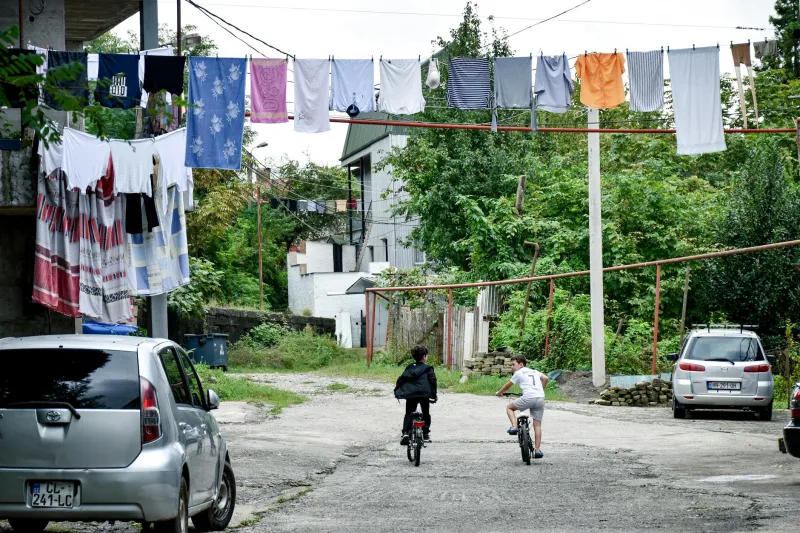
Ask anyone who grew up in America in the 1970s or early 80s what their childhood felt like, and you'll hear some version of the same story. They left the house after breakfast. They rode bikes to places their parents had never seen. They built forts, started games, resolved arguments, and figured things out — without an adult nearby and without a schedule telling them where to be next. They came home when it got dark, or when they heard their name called from a porch.
Now ask a parent of a 10-year-old in 2024 to describe their kid's typical Tuesday afternoon. Soccer practice at 4. Homework after dinner. Maybe thirty minutes of screen time before bed. The neighborhood, if there even is one in the old sense, barely enters the picture.
Something fundamental shifted in American childhood. The strange part is that nobody really decided it should.
What That Old Childhood Actually Looked Like
The free-range childhood of mid-20th century America wasn't a parenting philosophy. It was just how things worked. In 1969, approximately 48 percent of American children walked or biked to school. By 2009, that number had dropped to 13 percent. In the 70s and 80s, it wasn't unusual for a child of 8 or 9 to spend entire summer days out of the house, returning only for meals.
Researchers who study childhood mobility have a concept called the "home range" — the geographic area a child is allowed to explore independently. Studies comparing data across generations have found that children's home ranges have shrunk by roughly 90 percent since the 1970s. A child in 1970 might roam freely across a mile or more of neighborhood terrain. Today, many kids are confined to the immediate yard, if they go outside at all.
This wasn't just physical freedom. It was social and developmental. Kids in mixed-age groups negotiated rules, managed conflict, invented games, dealt with boredom, and built the kind of low-stakes social competence that doesn't come from a structured activity with a coach and a referee.
The Fears That Changed Everything
So what happened? The most common explanation is fear — specifically, the fear of strangers and the possibility of harm. And it's worth being honest about this: that fear, in many cases, isn't entirely rational.
Crime statistics tell an interesting story. Violent crime in the United States peaked in the early 1990s and has declined significantly since. Child abduction by strangers — the nightmare scenario that drives so much modern parenting anxiety — is, statistically, extraordinarily rare. The FBI estimates that fewer than 100 stranger abductions occur annually in a country of 330 million people. Yet surveys consistently show that parents today are far more worried about their children's physical safety than parents were in the 1970s, when actual crime rates were considerably higher.
The explanation for this gap is largely media. The 24-hour news cycle, cable television, and later social media have made rare, terrible events feel constant and common. The kidnapping story that once appeared in a regional newspaper now circulates nationally for weeks. The cumulative effect on parental perception has been enormous — and the behavioral response has been to keep children closer, schedule them more tightly, and reduce the unsupervised time that used to define childhood.
Screens Filled the Gap
Nature abhors a vacuum, and so does a child's afternoon. As outdoor, unstructured time contracted, screen time expanded to fill it. The average American child now spends between 5 and 7 hours a day in front of a screen, depending on age group, according to data from Common Sense Media. For comparison, studies of children's activity in the 1980s found that kids spent an average of 3 to 4 hours a day in outdoor, unstructured play.
The physical consequences are measurable. A 2019 study published in the journal Preventive Medicine found that American children today take an average of 4,000 to 6,000 steps per day. Children in the 1980s, researchers estimate, were averaging closer to 12,000 to 15,000. That's not a marginal difference. It's a complete restructuring of how young bodies move through the world.
The mental health picture is equally striking. Rates of childhood anxiety, depression, and loneliness have risen sharply over the past two decades. Researchers like psychologist Jean Twenge have tracked the correlation between increased screen time — particularly social media use — and declining adolescent wellbeing. Meanwhile, psychologist Peter Gray has spent years arguing that the decline in free play is directly connected to the rise in childhood mental health struggles, depriving kids of the experiences through which they learn to manage risk, failure, and independence.
The Scheduling of Everything
For children whose families can afford it, unstructured time has also been replaced by structured activity. Youth sports participation is up. Organized enrichment programs, tutoring, and extracurriculars fill the hours that previous generations spent messing around in the backyard. This isn't without value — organized activities build skills, discipline, and social connections. But they're not the same thing as unstructured play, and researchers increasingly argue they can't substitute for it.
The irony is sharp: American children today are, by some measures, more scheduled and supervised than any generation in history — and also reporting higher rates of loneliness and anxiety than previous generations did. The protection came at a cost that wasn't anticipated.
Nobody Decided This
Perhaps the most striking thing about this transformation is how undeliberate it was. There was no national conversation, no policy decision, no cultural moment where Americans collectively agreed that children should spend less time outside and more time supervised. It happened incrementally — one fearful news story at a time, one structured activity added to the calendar, one afternoon where the neighborhood just felt a little too quiet to let them go.
The kid who used to disappear until dark didn't go anywhere dramatic. The world just slowly, quietly closed in around them.