Death Was a Neighborhood Event: How Americans Once Faced Loss as a Community
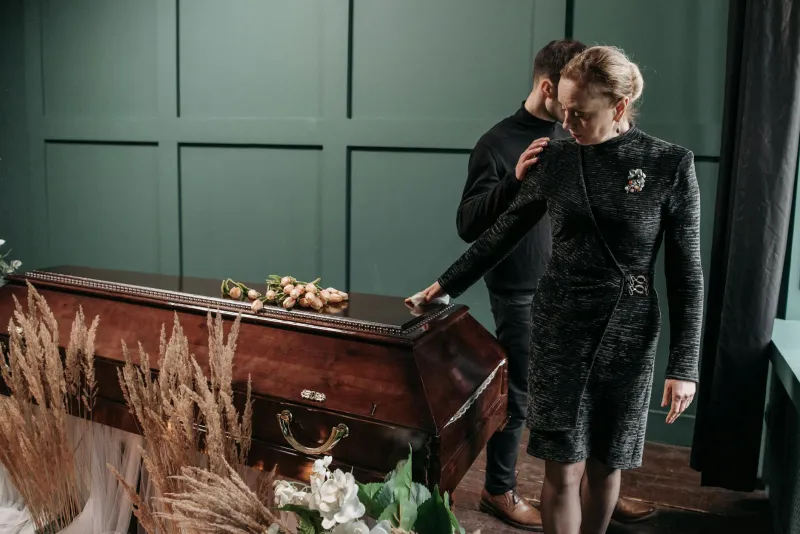
When Mrs. Henderson died in small-town Ohio in 1924, something remarkable happened. Within hours, neighbors appeared at her family's door — not just with casseroles, but with rolled-up sleeves and practical skills. Women arrived to wash and dress the body. Men brought lumber to build a simple coffin. Children were quietly shuttled between houses while adults transformed the Henderson living room into a space for mourning.
For three days, the community flowed in and out of that house. People sat with the body, shared stories, wept together, and gradually helped the family begin processing their loss. Death wasn't something that happened to individuals — it happened to neighborhoods.
That's not how Americans die anymore.
When Death Happened at Home
Before funeral homes became standard fixtures in American towns, death was as much a part of daily life as birth or marriage. Most people died at home, surrounded by family members who had been caring for them through their final illness. When the end came, the community's response was immediate and coordinated.
The ritual began with preparation. Female neighbors, often led by someone experienced in the process, would wash and dress the deceased. This wasn't considered morbid or unusual — it was a final act of care and respect. Families kept "laying out" clothes specifically for this purpose, and everyone understood their role in the process.
Men in the neighborhood typically handled the coffin. Local carpenters might donate their skills, or families would build simple pine boxes together. The deceased would be laid out in the front parlor — the most formal room in the house — surrounded by flowers from neighborhood gardens and homemade arrangements.
The Three-Day Gathering
What followed was a prolonged period of communal mourning that served multiple purposes. For 72 hours, the house remained open to visitors. People came in shifts — some staying for hours, others stopping by briefly to pay respects. This constant presence served practical and emotional functions that modern Americans have largely forgotten.
Practically, it ensured the grieving family didn't have to manage alone. Neighbors organized meal schedules, handled household chores, and managed the steady stream of visitors. Children were fed and supervised. Livestock were tended. Bills were quietly paid. The community created a protective buffer around the bereaved family's immediate needs.
Emotionally, the gathering allowed for shared processing of loss. Stories were told and retold. Laughter mixed with tears as people remembered the deceased's quirks, kindnesses, and contributions to community life. Grief became a collective experience rather than a private burden.
The extended timeline also helped families gradually accept their loss. Unlike today's compressed funeral schedule — often just a few hours between viewing and burial — the three-day gathering allowed for the slow, necessary work of saying goodbye.
The Business of Death
This intimate, community-centered approach to death began changing in the early 20th century as funeral directors professionalized their services and Americans increasingly moved to cities where neighborhood bonds were weaker.
Funeral homes started offering services that families had once provided for themselves: embalming, coffin construction, transportation, and ceremony coordination. What began as assistance gradually became replacement. Families were told that professionals could handle death "better" — more hygienically, more efficiently, more appropriately.
The shift accelerated after World War II. Suburban development scattered extended families. Women entered the workforce in larger numbers, reducing the pool of available community caregivers. Medical advances meant more people died in hospitals rather than at home. Death became increasingly institutionalized.
By the 1960s, the full-service funeral had become standard. Families met with funeral directors to select packages that included everything from embalming to flowers to burial arrangements. The process became streamlined, professional, and expensive — often costing thousands of dollars compared to the community-coordinated funerals that had cost families primarily time and shared labor.
Behind Closed Doors
Modern American funeral culture reflects broader changes in how we handle difficult emotions and life transitions. Today's typical funeral process — viewing, service, burial — is compressed into a few days and managed by professionals. Grieving families are encouraged to "celebrate life" and "find closure," language that suggests death should be processed efficiently rather than lived with over time.
The shift has practical advantages. Professional funeral directors handle complex logistics that might overwhelm grieving families. Embalming allows for delayed services that accommodate scattered relatives' travel schedules. Funeral homes provide neutral spaces for communities that lack strong neighborhood bonds.
But something essential was lost in the professionalization of death. The extended community mourning period once served as emotional scaffolding, supporting families through their most vulnerable moments. Today's abbreviated funeral schedule often leaves families feeling rushed through their grief, expected to "move on" before they've fully processed their loss.
The old system also taught children about death as a natural part of life. Kids who grew up attending three-day wakes learned that death was sad but manageable, that communities could weather loss together, and that grief was normal rather than pathological. Modern children often experience death as a mysterious, frightening event that adults handle in special buildings with professional assistance.
The Isolation of Modern Grief
Perhaps most significantly, the shift from community mourning to professional funeral services reflects broader changes in American social fabric. We've moved from a society where neighbors knew each other's extended families, health struggles, and life stories to one where grief often happens in isolation.
Today's bereaved families frequently report feeling abandoned after the funeral ends. The brief gathering that modern funerals provide — often just a few hours — doesn't create the sustained support network that three-day community wakes once generated. People return to their individual lives, and grieving families are left to navigate loss largely alone.
Social media has partially filled this gap, allowing for extended sharing of memories and ongoing support. But online condolences can't replace the physical presence, practical assistance, and sustained attention that characterized traditional community mourning.
Lessons from the Past
The story of how Americans once mourned together isn't just historical curiosity — it offers insights into what we might be missing in our current approach to death and grief.
The old system recognized that death affects entire communities, not just immediate families. It built in time for gradual acceptance rather than rapid "closure." It treated grief as a normal human experience that required sustained support rather than professional intervention.
Some contemporary movements are rediscovering these insights. Home funeral advocacy encourages families to reclaim death care. Grief counselors increasingly emphasize the importance of community support and extended mourning periods. "Death cafes" and similar gatherings create space for conversations about mortality that were once routine parts of community life.
But these remain niche movements in a society that has largely medicalized death and privatized grief. Most Americans today will experience loss in ways their great-grandparents would find bewilderingly isolated and rushed.
The transformation of American mourning culture reveals how professionalization and efficiency can solve practical problems while creating new emotional and social challenges. We gained expertise and convenience. We lost community support and shared wisdom about one of life's most universal experiences.
As we continue navigating a world where traditional community bonds are weakening, the story of how we once mourned together offers both nostalgia and guidance for what death and grief might look like in a more connected society.