Clocking Out Used to Mean Something: The Hidden Trade-Off in How Americans Work Now
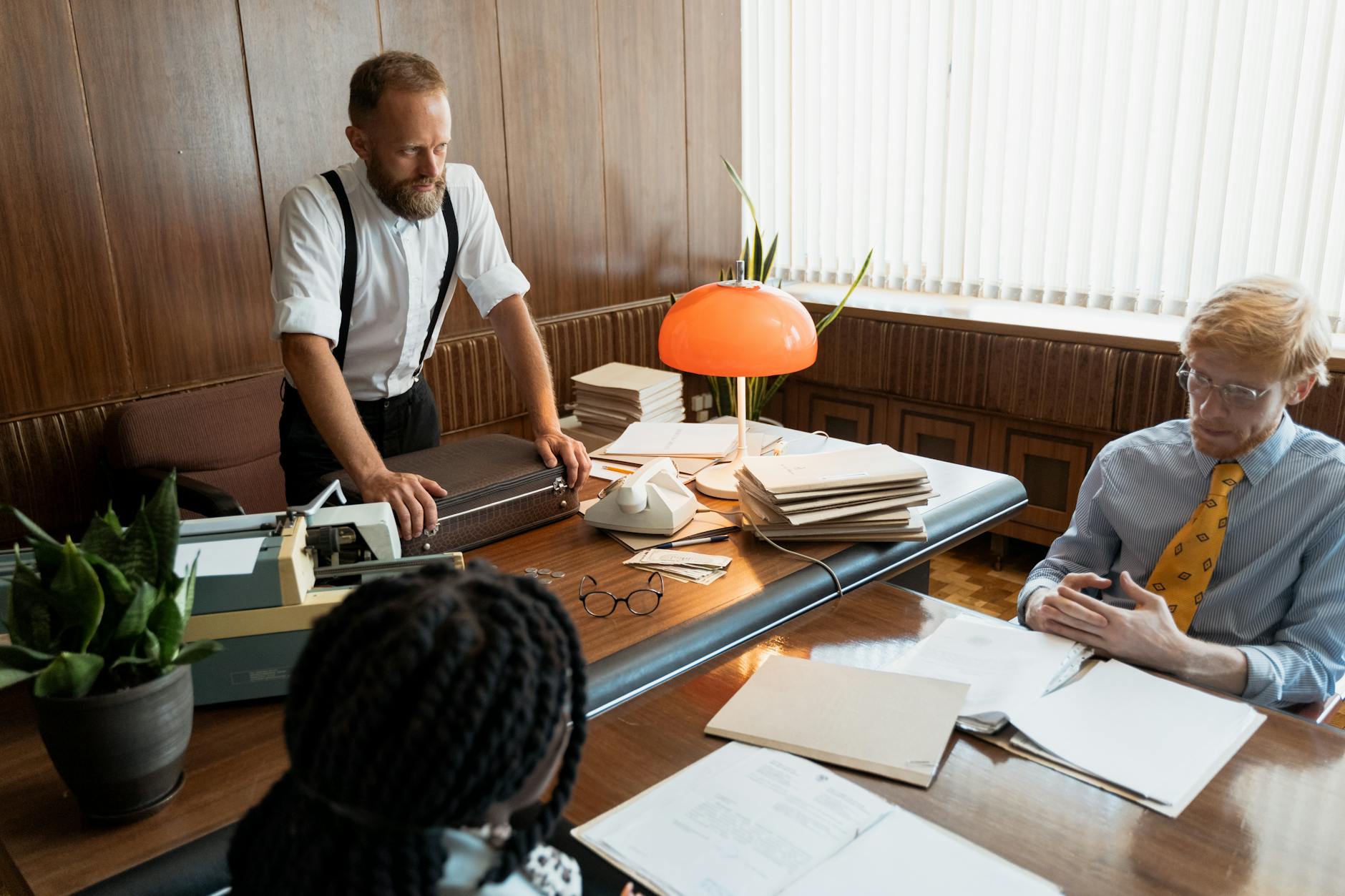
Clocking Out Used to Mean Something: The Hidden Trade-Off in How Americans Work Now
Imagine finishing work at 5:00 PM on a Friday and genuinely not thinking about your job again until Monday morning. No emails. No Slack notifications. No nagging sense that you should be checking in. Your boss had no way to reach you at home unless they called your landline — and almost nobody did that.
For a huge portion of the American workforce in the 1970s and 1980s, that was just called the weekend.
It sounds almost utopian from where we're standing now. But before you fully romanticize it, that same work world came with its own rigid walls, unspoken rules, and limitations that would feel suffocating to most workers today. The story of how the American workday transformed over the past 50 years is not a simple tale of progress — it's a genuine trade-off, and most of us are still figuring out whether we came out ahead.
The World of the 9-to-5 (When It Actually Was 9-to-5)
In the post-war decades through the late 1970s, the American workplace was defined by structure. For blue-collar workers, that meant a literal time clock — you punched in, you punched out, and your hours were recorded on paper. For white-collar office workers, the structure was less mechanical but no less real. You showed up, you sat at a desk, you worked until the end of the day, and you went home.
The office itself was a physical place in a way that's hard to fully appreciate now. Work happened there, and nowhere else. There were no laptops to take home, no VPNs to log into, no way to fire off a quick email from the couch at 10 PM. The separation between professional life and personal life wasn't a wellness goal or a productivity strategy — it was just how things physically worked.
This era also had its own rituals that have largely disappeared. The two-martini lunch — a cultural shorthand for a mid-century business culture where long, alcohol-lubricated midday meals were standard practice and even tax-deductible — was genuinely common in certain industries through the 1970s. Advertising, finance, law, publishing: expense account lunches were a fixture. The Tax Reform Act of 1986 cut the meal deduction from 100 percent to 80 percent, and the culture began to fade. Today it's essentially gone.
There was also the matter of mandatory retirement. Before the Age Discrimination in Employment Act was amended in 1986, many companies could legally require employees to retire at 65. You didn't get to decide when you were done — the institution did. The idea of a 70-year-old still grinding through a demanding career, as is increasingly common today, would have seemed unusual, if not impossible, in that era.
The Freedoms We Gained (And What They Cost)
The transformation of the American workday didn't happen all at once. It came in waves — each one expanding possibility while quietly eroding boundaries.
The personal computer arrived in offices during the 1980s and changed the nature of knowledge work fundamentally. Work that once required physical presence — filing, drafting, calculating, communicating — could increasingly be done anywhere a computer existed. The laptop, which became genuinely portable in the 1990s, was the first crack in the wall between office and home.
The internet and email blew that wall wider open. By the late 1990s, the expectation that you might respond to a work email in the evening had begun to creep in. It wasn't universal yet, but the direction was clear.
Then came the smartphone. The iPhone launched in 2007. By 2012, a majority of American adults had one. And with it came the quiet, creeping normalization of being reachable at all times. Your office was now in your pocket. It came to every dinner, every vacation, every bedtime. The boundary that once existed by default — because the technology didn't allow for intrusion — had to be actively defended, and most people weren't winning that fight.
The COVID-19 pandemic accelerated everything. Remote work, which had been inching forward for years, became mandatory overnight for millions of knowledge workers. When offices reopened, many employees didn't want to go back — and surveys showed why: flexibility, no commute, better work-life integration. The hybrid model emerged as the new normal for a significant portion of the workforce.
But the pandemic also revealed something uncomfortable: when your home is your office, the office never closes.
The Gig Economy and the Illusion of Freedom
Alongside the remote work revolution, another shift reshaped American labor: the rise of the gig economy. Platforms like Uber, DoorDash, TaskRabbit, and Fiverr created a workforce of independent contractors who set their own hours, chose their own assignments, and answered to no single employer.
On paper, this looks like maximum freedom. In practice, it often means maximum precarity. Gig workers generally receive no employer-sponsored health insurance, no paid time off, no retirement contributions, and no unemployment benefits. The flexibility is real — but so is the financial exposure. Studies have consistently shown that a significant portion of gig workers earn below minimum wage once expenses are factored in.
The traditional employment model of the 1970s — stable, somewhat rigid, often unionized — offered far less autonomy but far more security. You knew what you were getting. The modern gig model offers autonomy and uncertainty in equal measure, and the worker absorbs all the risk.
Has Work-Life Balance Actually Improved?
This is the question worth sitting with. The standard narrative is that modern workers have it better: more flexibility, more autonomy, more options. And for some people — particularly educated professionals with in-demand skills — that's genuinely true. The ability to work from home, set your own schedule, and avoid a brutal commute represents a real quality-of-life improvement.
But the data tells a more complicated story. American workers today report higher levels of work-related stress than in previous decades. Studies on remote work have found that remote employees often log more hours than their in-office counterparts, not fewer. The average American worker now checks work email outside of business hours regularly — many do so first thing in the morning and last thing at night.
The 1970s office worker had fewer choices. But they also had something that's become genuinely scarce: the ability to stop.
There's a version of the modern work world that delivers on its promise — flexible, humane, efficient, and respectful of the whole person. Some companies and some workers have found it. But for many Americans, what was sold as freedom has quietly become a different kind of trap: one with no fixed hours, no guaranteed floor, and no real moment when the day is actually done.
Clocking out used to mean something. It might be worth asking what it would take to get that back.
Data referenced from the Bureau of Labor Statistics, Pew Research Center, and Stanford's Remote Work research project led by economist Nicholas Bloom.